
Yushi God of Rain
雨师 · 雨師
Yushi, Pingyi, and Chisongzi
Divine Office
- Governing rainfall upon the human realm and bestowing life-giving moisture upon all things
- Regulating droughts and floods to safeguard bountiful harvests of the Five Grains
- Collaborating with Fengbo (God of Wind) and Leigong (God of Thunder) to jointly govern celestial phenomena, wind, and rain
- Receiving grand communal rain-prayer sacrifices from the populace during prolonged droughts
Origin & Legend
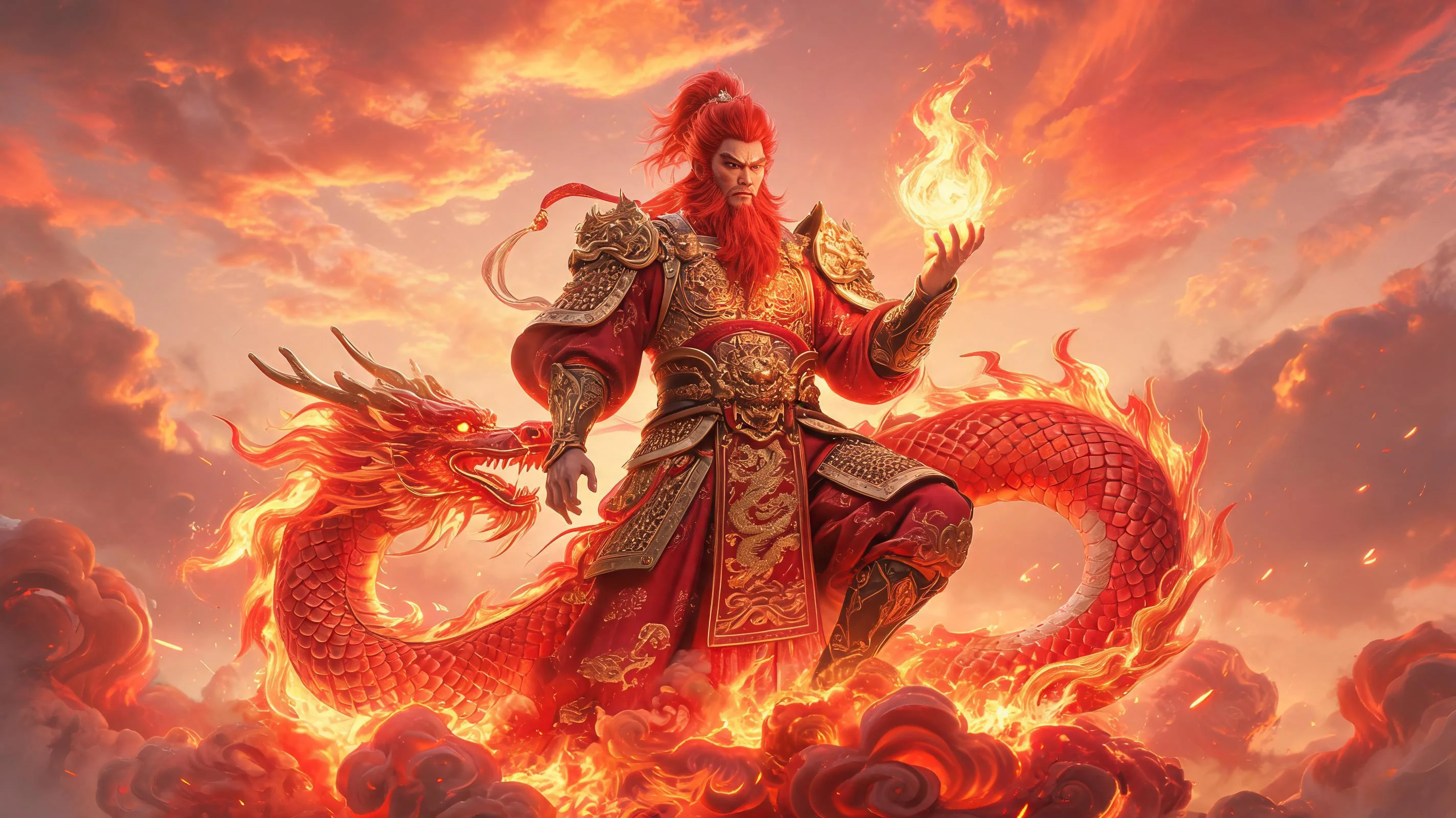
Yushi was venerated in antiquity as the divine sovereign of rainfall. His name varied across texts: sometimes called Pingyi, sometimes Chisongzi. The Liexian Zhuan (Biographies of Immortals) identifies Chisongzi as the rain master during Shennong’s reign, noting that he consumed aqueous jade to instruct Shennong and possessed the power to enter fire unscathed and ride the winds freely through heaven and earth. By the Zhou dynasty, formal yu-sacrifices (rain-prayer rituals) were already established, and during the early Han dynasty, temples dedicated to Yushi were erected at the commandery and county levels, enshrined alongside Fengbo and Leigong in the state sacrificial canon. Since agriculture depended entirely on climatic fortune, during severe droughts emperors and commoners alike observed fasting and purification rites to pray for rain before Yushi; conversely, when excessive rain threatened crops, they petitioned him to restrain his downpour. This belief endured throughout successive imperial dynasties, enshrined in official state rites, and together with Fengbo formed the mythological bedrock of the Chinese ideal of harmonious weather—wind in due measure, rain in timely abundance.
 Safety & Blessing
 Safety & Blessing
 Safety & Blessing
 Safety & Blessing
 Safety & Blessing
 Safety & Blessing
 Safety & Blessing
 Safety & Blessing