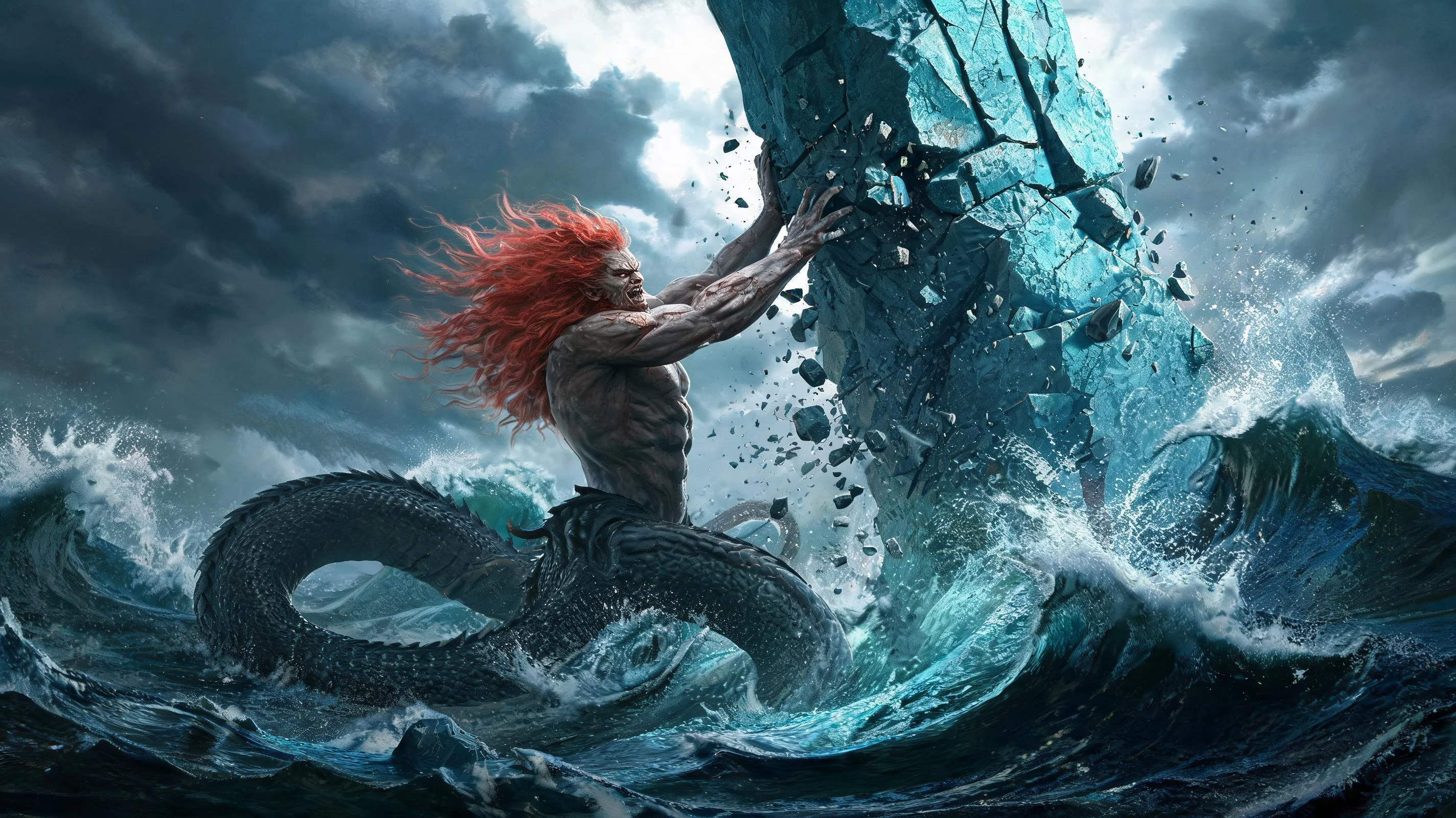
Gonggong God of Water
水神共工 · 水神共工
The Divine Ruler of Waters
Divine Office
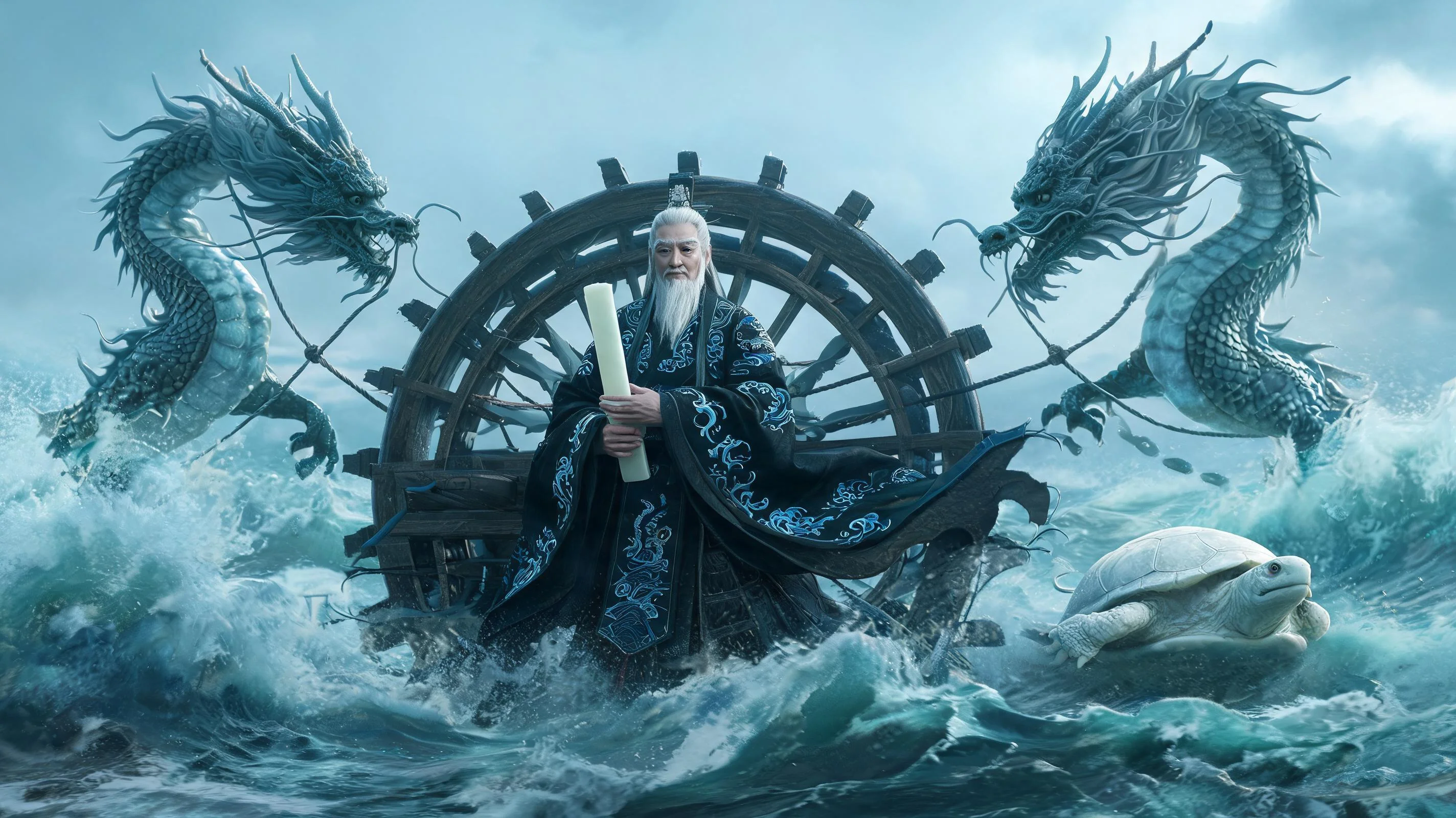
- Oversees all hydrological administration across the realm, governing rivers, lakes, and marshlands
- In antiquity revered as the sovereign of floods and deluges
- In a fit of rage, struck Mount Buzhou, causing the heavens to tilt toward the northwest and the earth to sink in the southeast
- His myth explains China’s topographical gradient—high in the northwest and low in the southeast
Origin & Legend
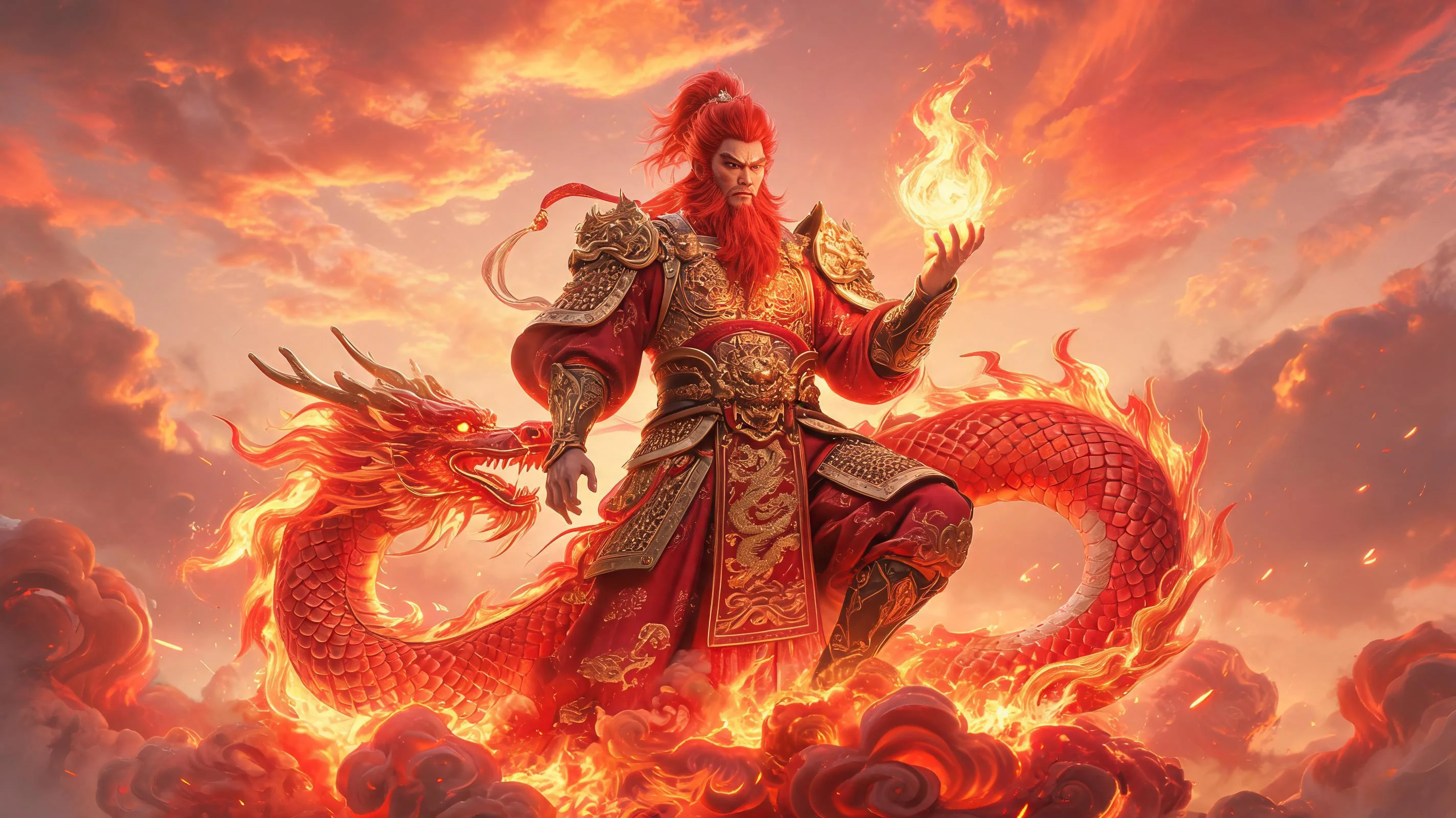
Gonggong is an ancient mythological deity of water, standing in cosmic opposition to Zhu Rong, the god of fire. He appears as a being with a human face, a serpentine body, and vermilion hair. According to legend, Gonggong contested with Zhuanxu for supremacy over the celestial realm; enraged by defeat, he rammed Mount Buzhou—the celestial pillar—shattering the heavenly column and severing the earthly cords that bound heaven and earth. As a result, the heavens tilted toward the northwest, shifting the courses of sun, moon, and stars, while the earth sank in the southeast, causing rivers, floods, and dust to flow eastward and southward. This grand, awe-inspiring myth accounts for China’s distinctive topography—elevated in the northwest and depressed in the southeast—as well as the eastward flow of its great rivers. It also forms a vital narrative bridge with Nüwa’s legend of smelting five-coloured stones to repair the fractured sky, together constituting a cornerstone of Chinese cosmogonic mythology. Throughout imperial rites and historical records, floods and water disasters were frequently attributed to Gonggong’s influence; though his persona carries tragic and destructive overtones, he remains one of the most powerful and primordial deities in Chinese cultural imagination.
 Safety & Blessing
 Safety & Blessing
 Safety & Blessing
 Safety & Blessing
 Safety & Blessing
 Safety & Blessing
 Safety & Blessing
 Safety & Blessing