
Hebo the River God
河伯 · 河伯
Hebo, Bingyi, and Fengyi
Divine Office
- Govern the hydrological administration of the Yellow River, regulating its seasonal rises and falls
- Oversee all rivers and aquatic palaces throughout the realm
- Safeguard the safety and tranquillity of riverine transport and ensure dikes remain intact
- Receive annual sacrifices from communities dwelling along the riverbanks in antiquity
Origin & Legend
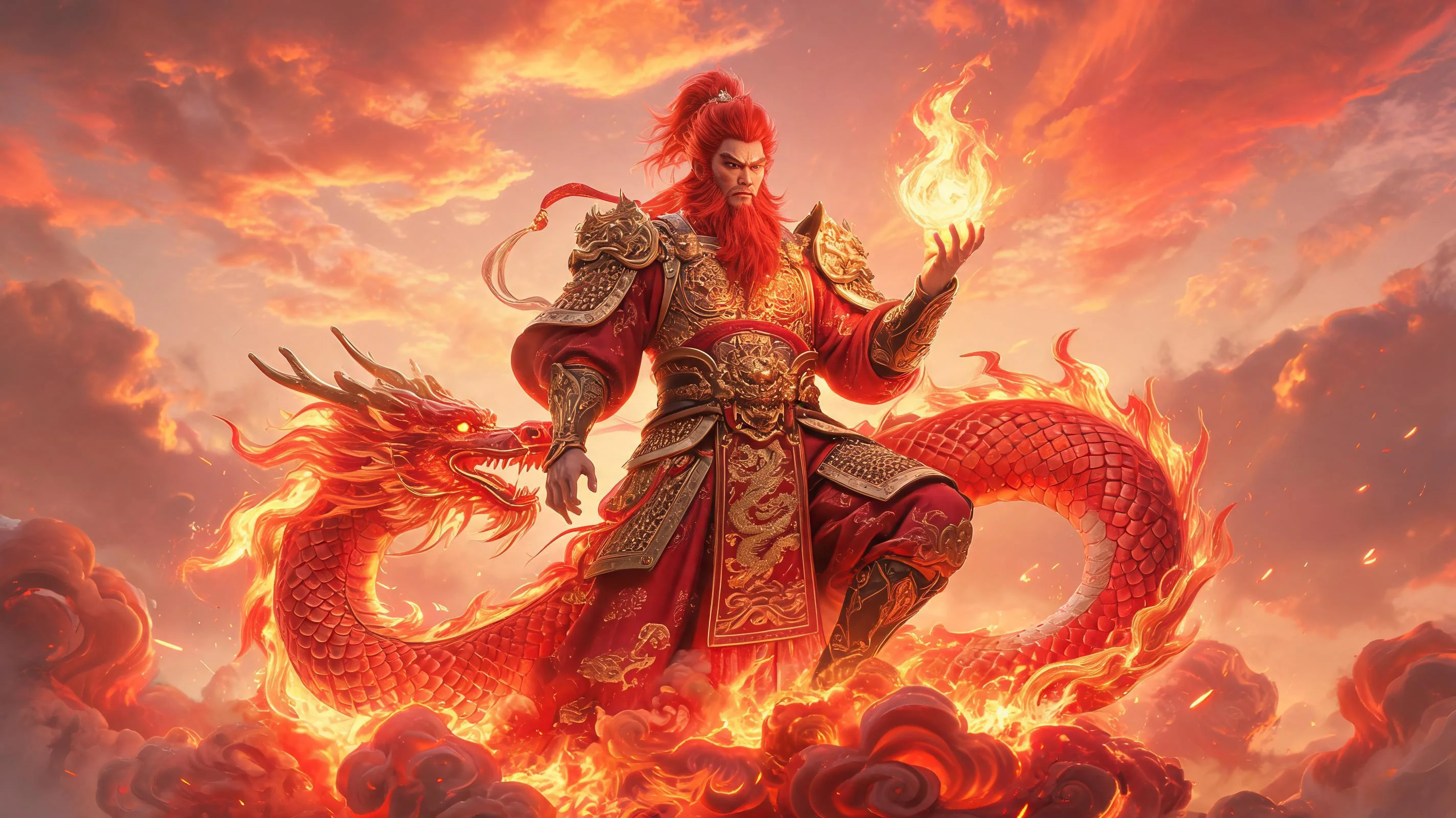
Hebo was a pre-Qin dynasty river deity of great prominence, also known as Bingyi or Fengyi; legend holds that he drowned in the river and was subsequently enfeoffed as its divine sovereign. The Zhuangzi recounts Hebo’s famous sigh of awe upon gazing at the boundless ocean, while the 'Hebo' section of the Nine Songs vividly portrays him riding a water-chariot drawn by two dragons as he soars across the Nine Rivers. During the Warring States period, the magistrate Ximen Bao governed Ye and abolished the cruel local custom of sacrificing young maidens as brides to Hebo—a practice that left a lasting moral lesson against excessive and superstitious ritual. By the Han dynasty, state-sponsored sacrifices to the River God had been formally incorporated into the imperial cult, and Emperor Wu personally presided over ceremonies at the riverbank, casting jade bi-discs into the waters as offerings. From the Tang and Song dynasties onward, the River God gradually received royal titles through imperial edict, yet the ancient appellation 'Hebo' persisted in classical texts and collective memory.
 Safety & Blessing
 Safety & Blessing
 Safety & Blessing
 Safety & Blessing
 Safety & Blessing
 Safety & Blessing
 Safety & Blessing
 Safety & Blessing