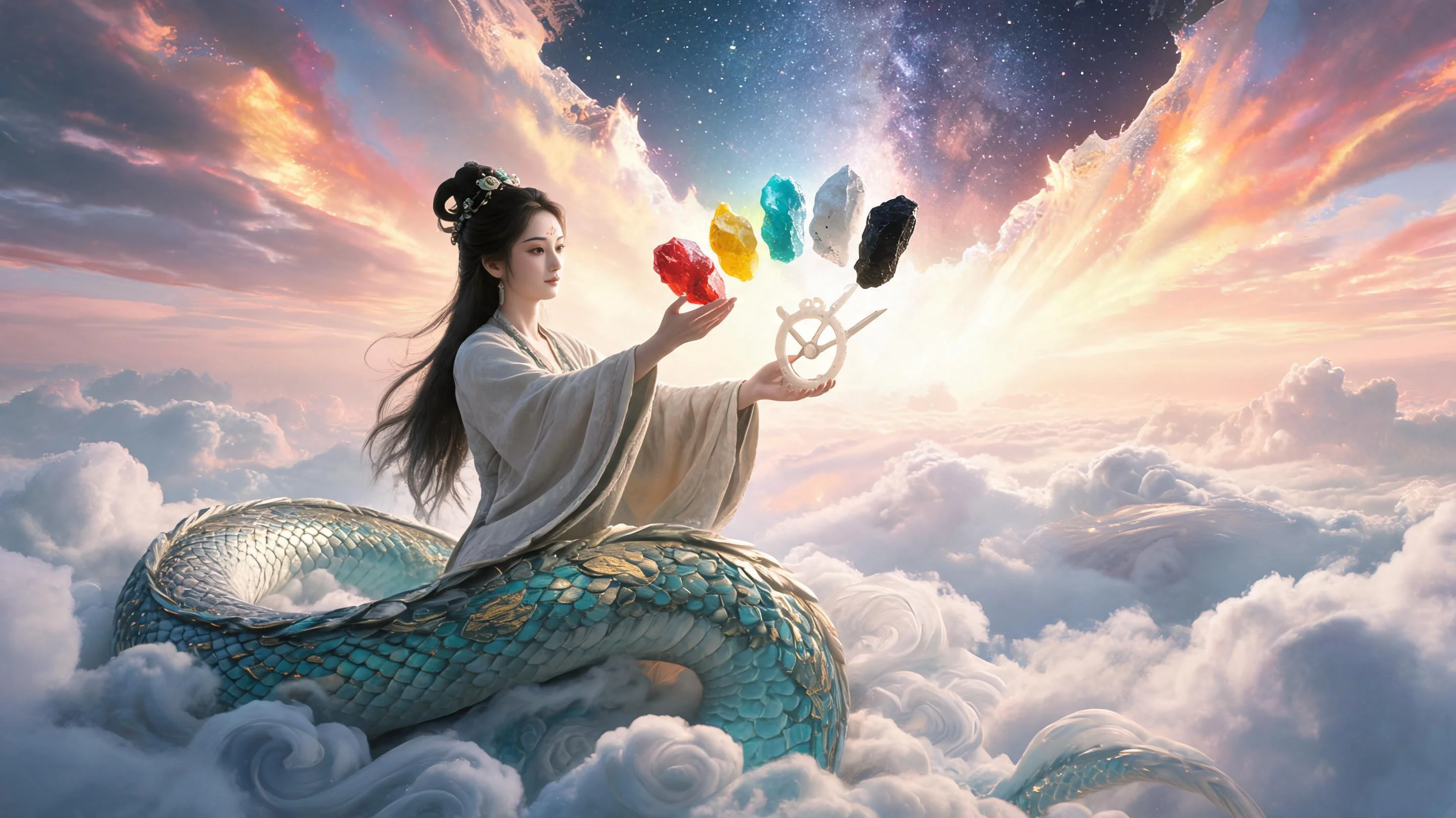
Nüwa
女娲 · 女媧
Holy Mother Who Molded Humanity from Clay and Mended the Heavens with Reforged Stones
Divine Office
- Molding humanity from clay to create humankind
- Mending the heavens by smelting multicolored stones to save all living beings
- Governing marriage, fertility, child-bestowal, and blessings
- Inventing the sheng (ancient Chinese mouth organ) and civilizing the people through music and ritual
Origin & Legend
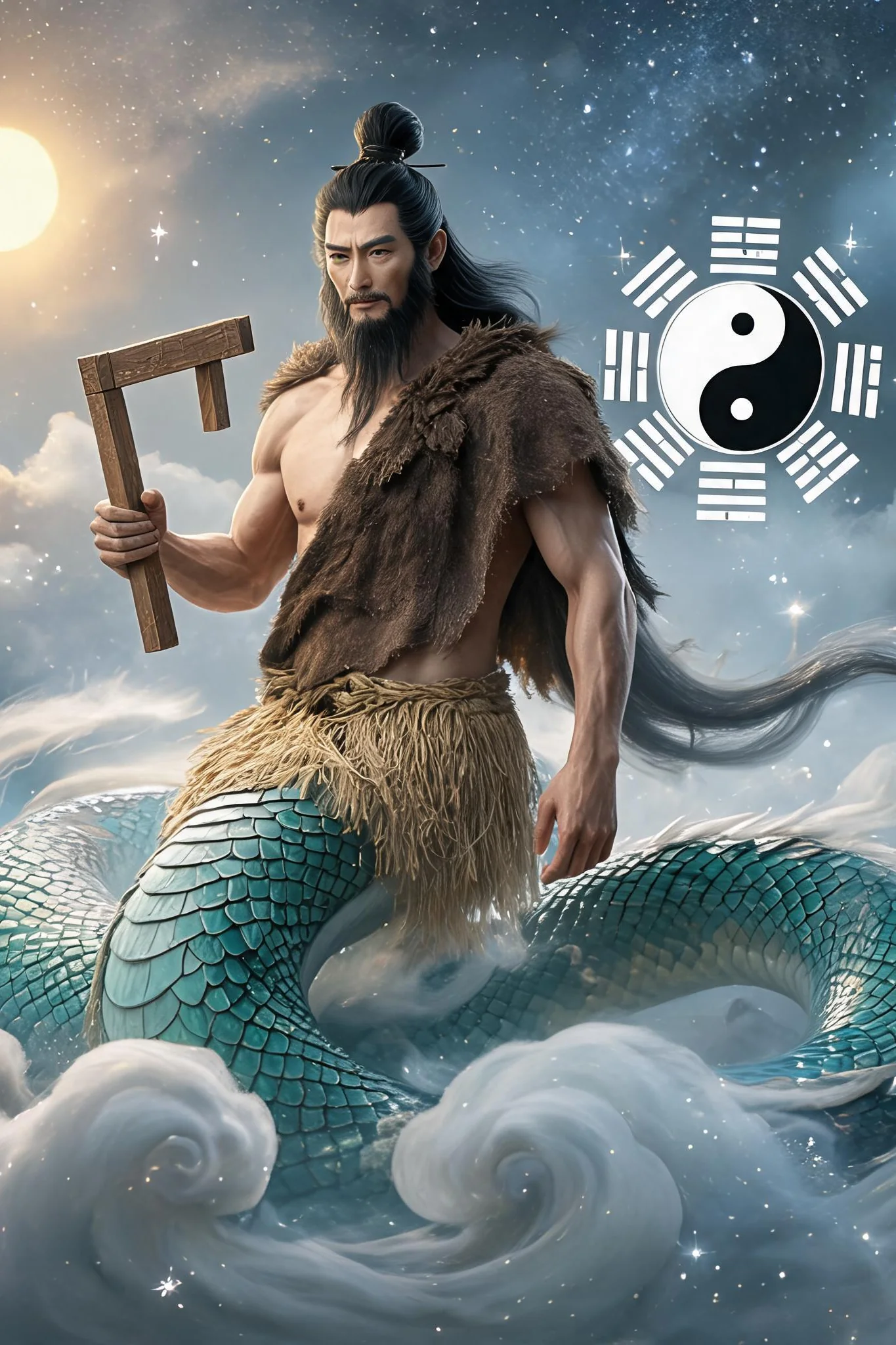
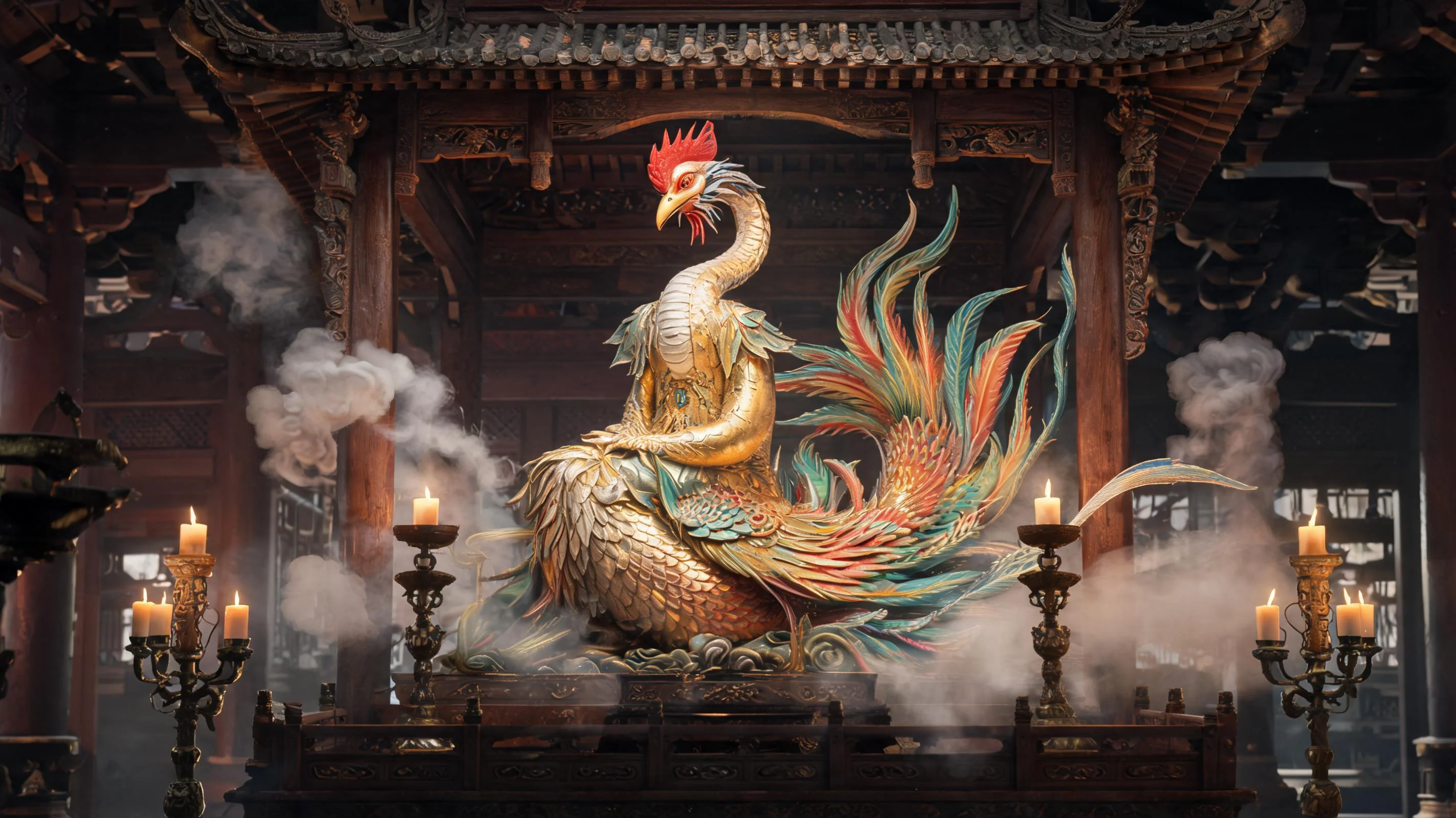
Nüwa is among the most venerated creator deities in Chinese mythology. According to legend, after the cosmos was first formed, Nüwa wandered across the vast, silent wilderness and, struck by its profound solitude, began fashioning human figures from yellow earth—first carefully shaping each one by hand, then later flicking ropes dipped in mud to generate countless more. Thus humanity came into being, and she became honored as the Mother of Humankind. She also instituted the institution of marriage, pairing men and women so that generations might succeed one another, earning her recognition as the earliest divine matchmaker. When the sky collapsed and the earth ruptured, plunging the world into chaos, Nüwa smelted five-colored stones to repair the heavens, severed the legs of a giant sea turtle to prop up the four cardinal corners of the world, and slew a black dragon to rescue the people of Jizhou. Through these acts, peace and stability were restored to all living beings. In Han-dynasty pictorial stone carvings, Nüwa appears as a human-headed, serpentine-bodied deity holding a compass, entwined tail-to-tail with Fuxi—who holds a carpenter’s square—symbolizing cosmic order and complementary duality. For over two millennia, devotees have journeyed to Wahuang Palace to pray to Nüwa for children, harmonious marriages, and auspicious unions; its temple fair has drawn continuous incense offerings and pilgrims across centuries.
 Warding Off Evil
 Safety & Blessing
 Children & Marriage
 Health & Averting Calamity
 Children & Marriage
 Safety & Blessing
 Safety & Blessing
 Safety & Blessing