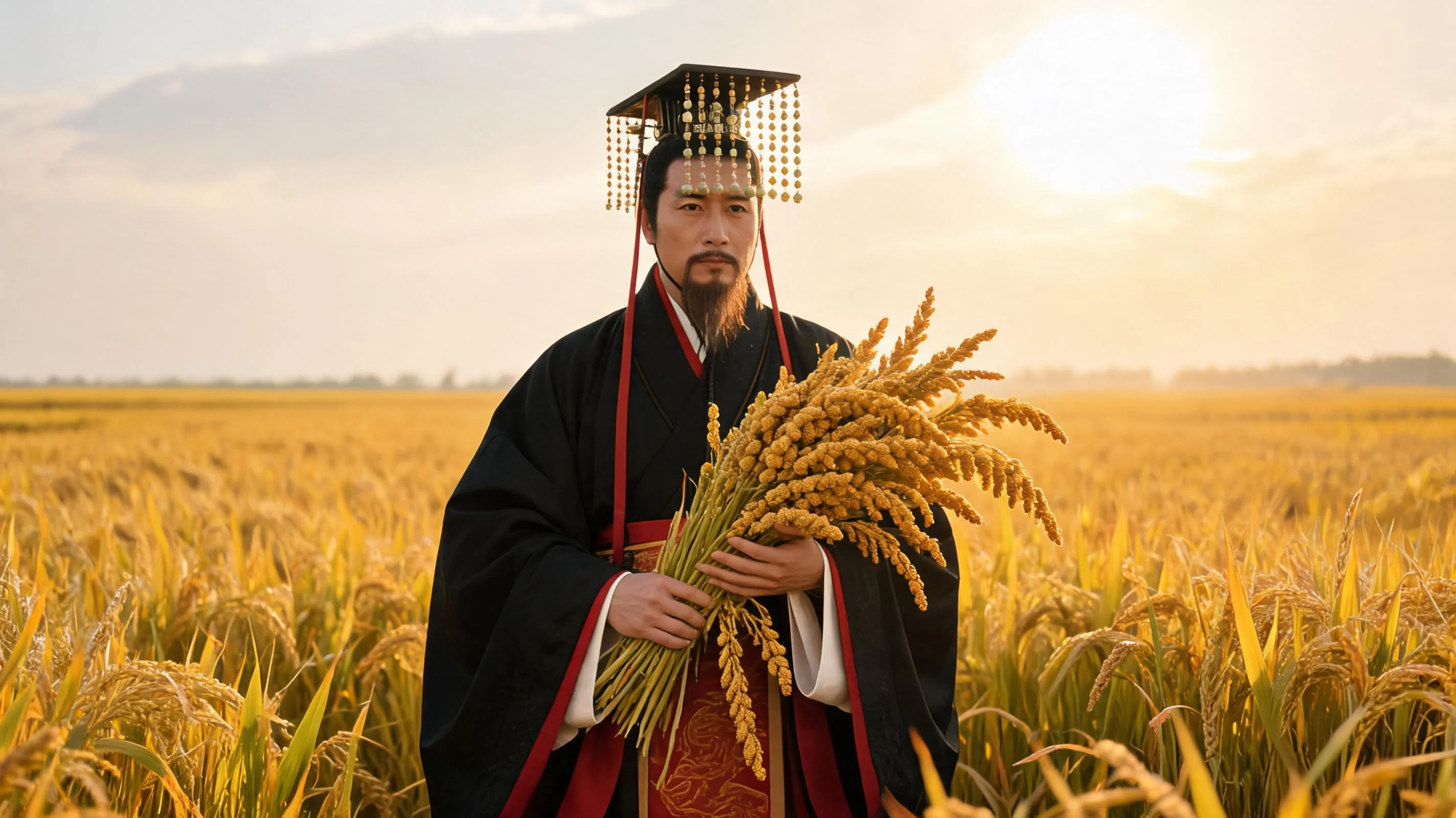
Ji Shen (God of Grains)
稷神 · 稷神
Divine Sovereign of the Millet Sacrifice · Deity of the Five Grains
Divine Office
- Overseeing the growth of the Five Grains
- Blessing agricultural cultivation and ensuring bountiful harvests
- Safeguarding granaries and ensuring their abundance
- Instructing the people in the arts of farming
Origin & Legend
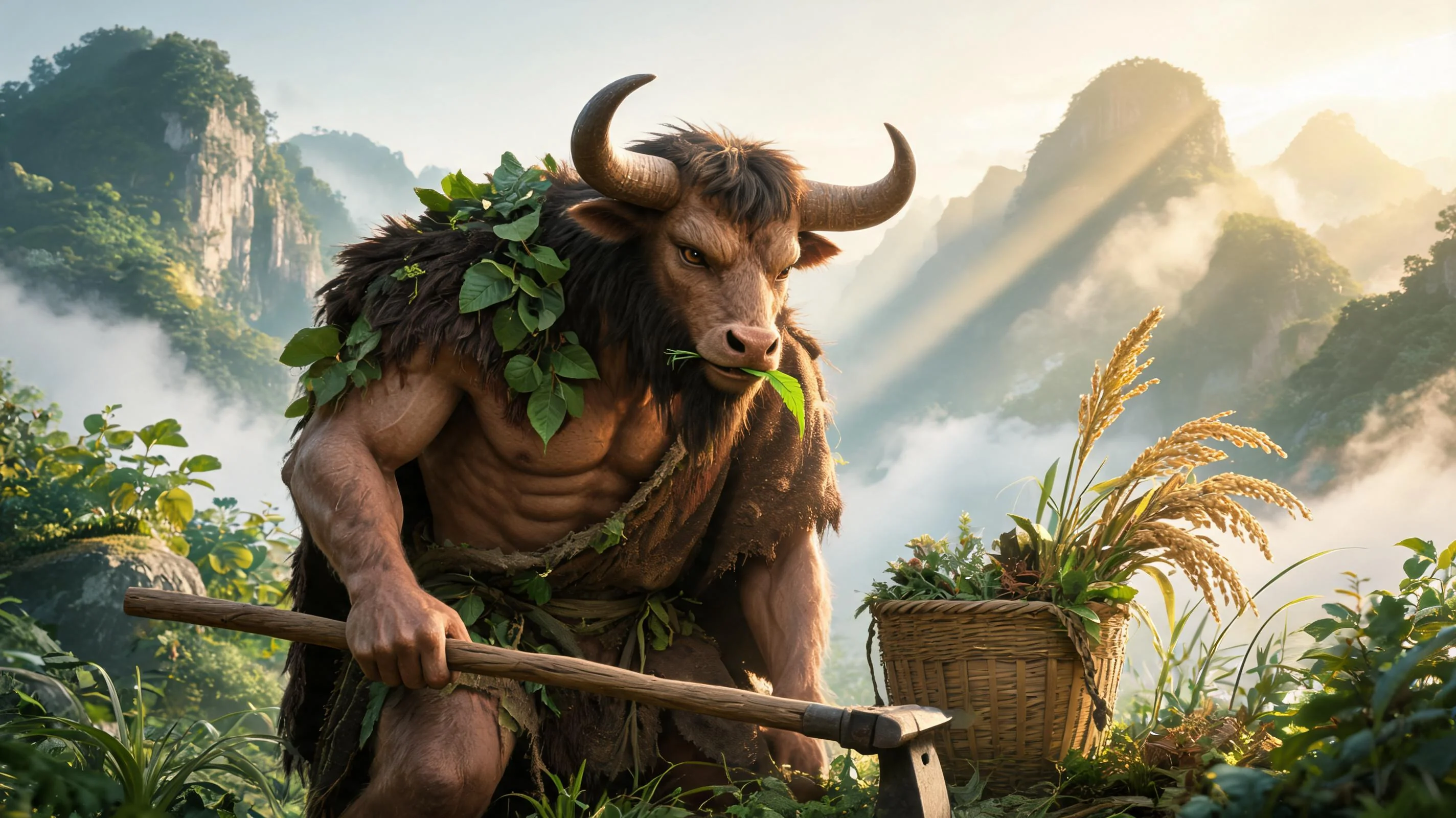
Ji Shen, the Deity of the Five Grains, is paired with She Shen (the Earth God) to form the compound term 'Sheji', which since antiquity has symbolized the state itself—the very foundation of national sovereignty—since humanity cannot stand without earth nor live without grain. Ji Shen’s human incarnation is traditionally identified as Qi, the legendary progenitor of the Zhou people and later deified as Hou Ji (Lord of Millet), the Divine Patron of Agriculture: from childhood, Qi displayed an extraordinary affinity for cultivating hemp and beans; during the reign of Emperor Yao, he was appointed Minister of Agriculture, and under Emperor Shun, he was commissioned to disseminate the timely sowing of all grains, instructing the people in the principles of farming—thus bringing prosperity to the realm. After his death, he was enshrined as the divine embodiment of Ji Shen, and worship of him has continued unbroken through the ages. Successive imperial dynasties maintained the dual arrangement of ancestral temples on the left and the Sheji Altars on the right within the imperial capital, placing the Grand She and Grand Ji altars side by side near the imperial palace—ritual centres equal in importance to the imperial ancestral temple itself. The Sheji Altar in Beijing’s Zhongshan Park preserves this tradition, hosting joint rites for both She Shen and Ji Shen upon a single altar, its five-coloured soil representing the empire’s territorial expanse; likewise, during the folk She Festival, offerings are made to Ji Shen as well, praying for annual abundance of the Five Grains and overflowing granaries.
 Warding Off Evil
 Children & Marriage
 Safety & Blessing
 Children & Marriage
 Health & Averting Calamity
 Children & Marriage
 Safety & Blessing
 Safety & Blessing