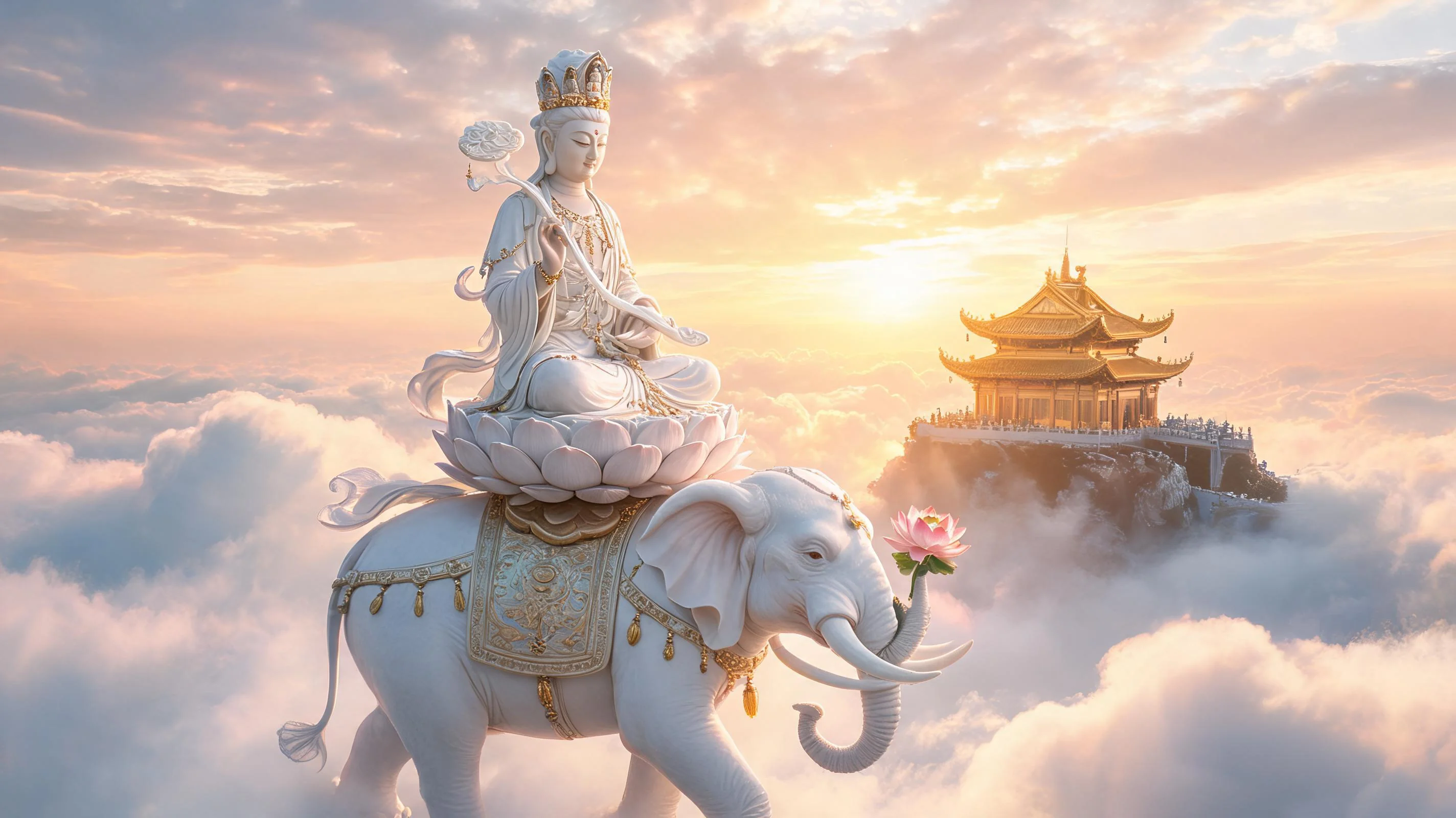
Samantabhadra Bodhisattva
普贤菩萨 · 普賢菩薩
Great-Practice Samantabhadra Bodhisattva
Divine Office
- Symbolising the virtue of principle and great practice, guiding sentient beings to embody Buddhist teachings in daily life
- Protecting those with unwavering vows and ensuring the successful accomplishment of all undertakings
- Extending lifespan and averting calamities
- Delivering sentient beings through the Ten Great Vows and cultivating extensive offerings
Origin & Legend
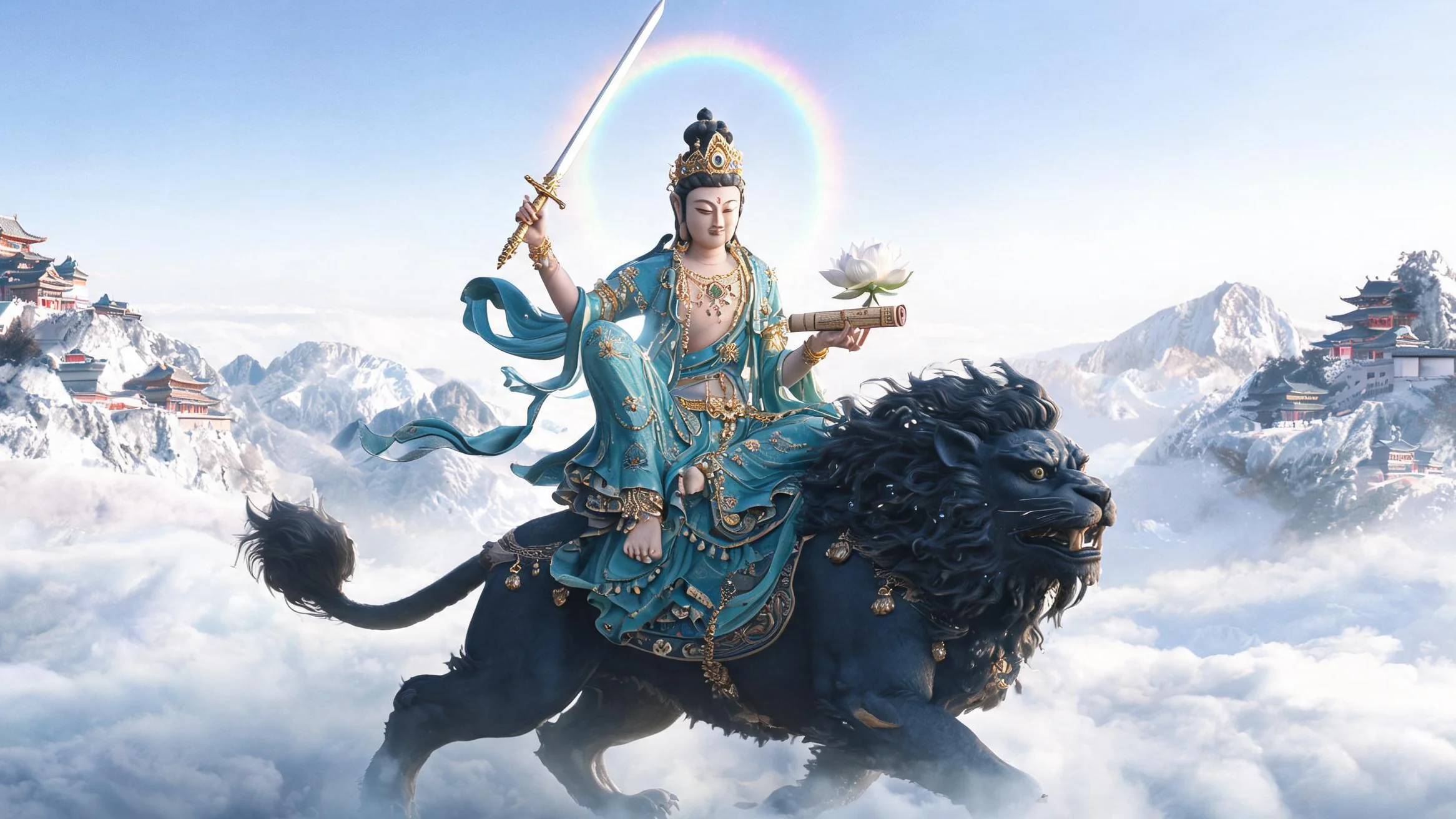
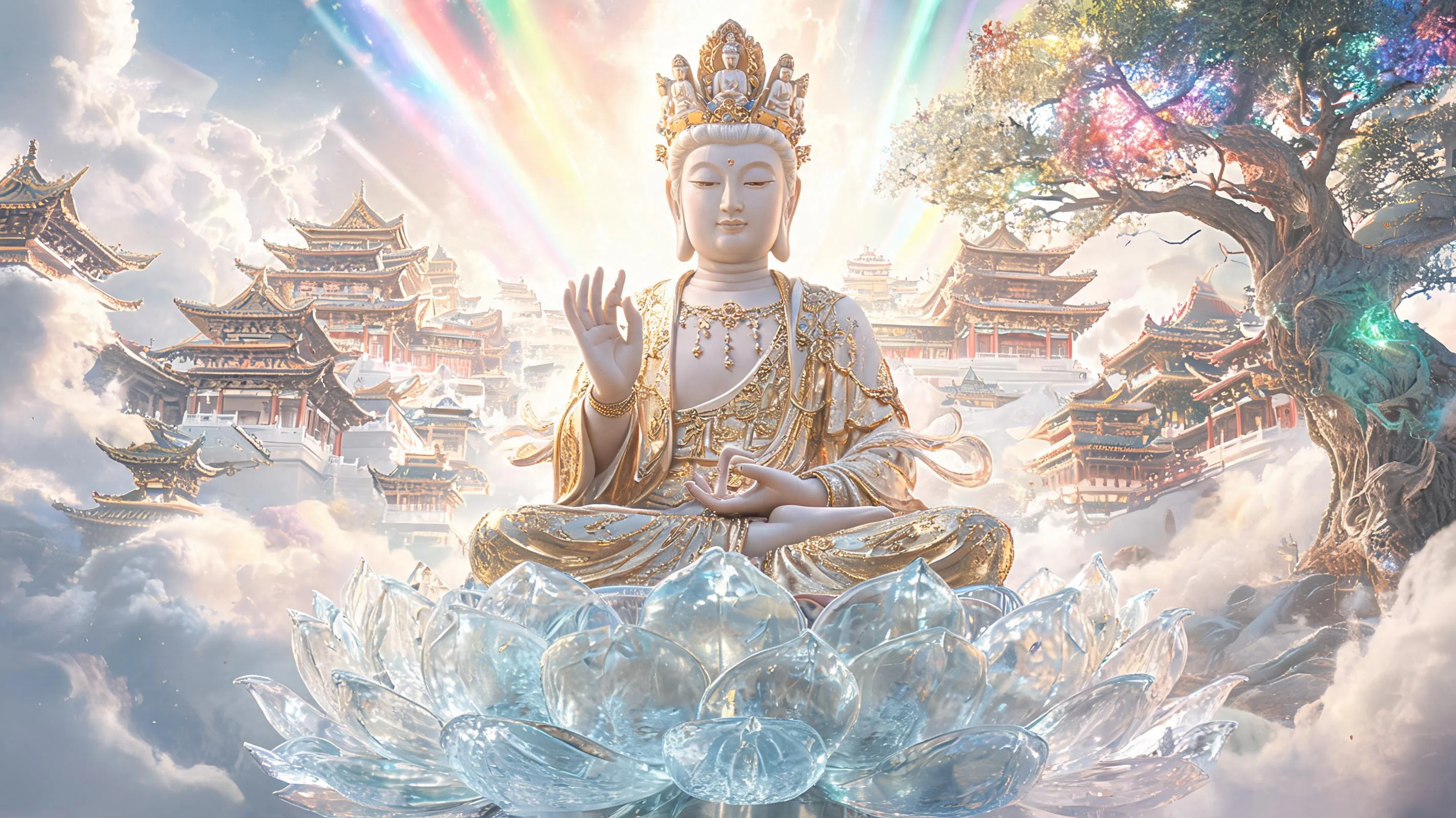
Samantabhadra Bodhisattva’s Sanskrit name is Samantabhadra, meaning ‘Universally Worthy’ or ‘All-Pervading Auspiciousness’, signifying his embodiment of the Buddha’s virtue of principle and his boundless vows and practices. Complementing Wenshu Bodhisattva (Manjushri), who personifies wisdom, Puxian serves as one of the two principal attendants flanking Shakyamuni Buddha. The Avatamsaka Sutra records his Ten Great Vows—including paying homage to all Buddhas, making extensive offerings, repenting karmic obstacles—which serve as the foundational guide for Buddhist practitioners. The Lotus Sutra states that he rides a six-tusked white elephant to safeguard those who uphold and recite the sutra. In Chinese Buddhism, Mount Emei in Sichuan Province is revered as his sacred abode: the bronze statue of Samantabhadra enshrined at Wannian Temple was cast during the Northern Song Dynasty, standing over seven metres tall and weighing more than sixty-two tonnes. Today, the gilded Samantabhadra statue atop the Golden Summit, overlooking the sea of clouds at Mount Emei, is renowned throughout the world.
 Children & Marriage
 Safety & Blessing
 Safety & Blessing
 Health & Averting Calamity
 Studies & Exams
 Safety & Blessing
 Health & Averting Calamity
 Safety & Blessing