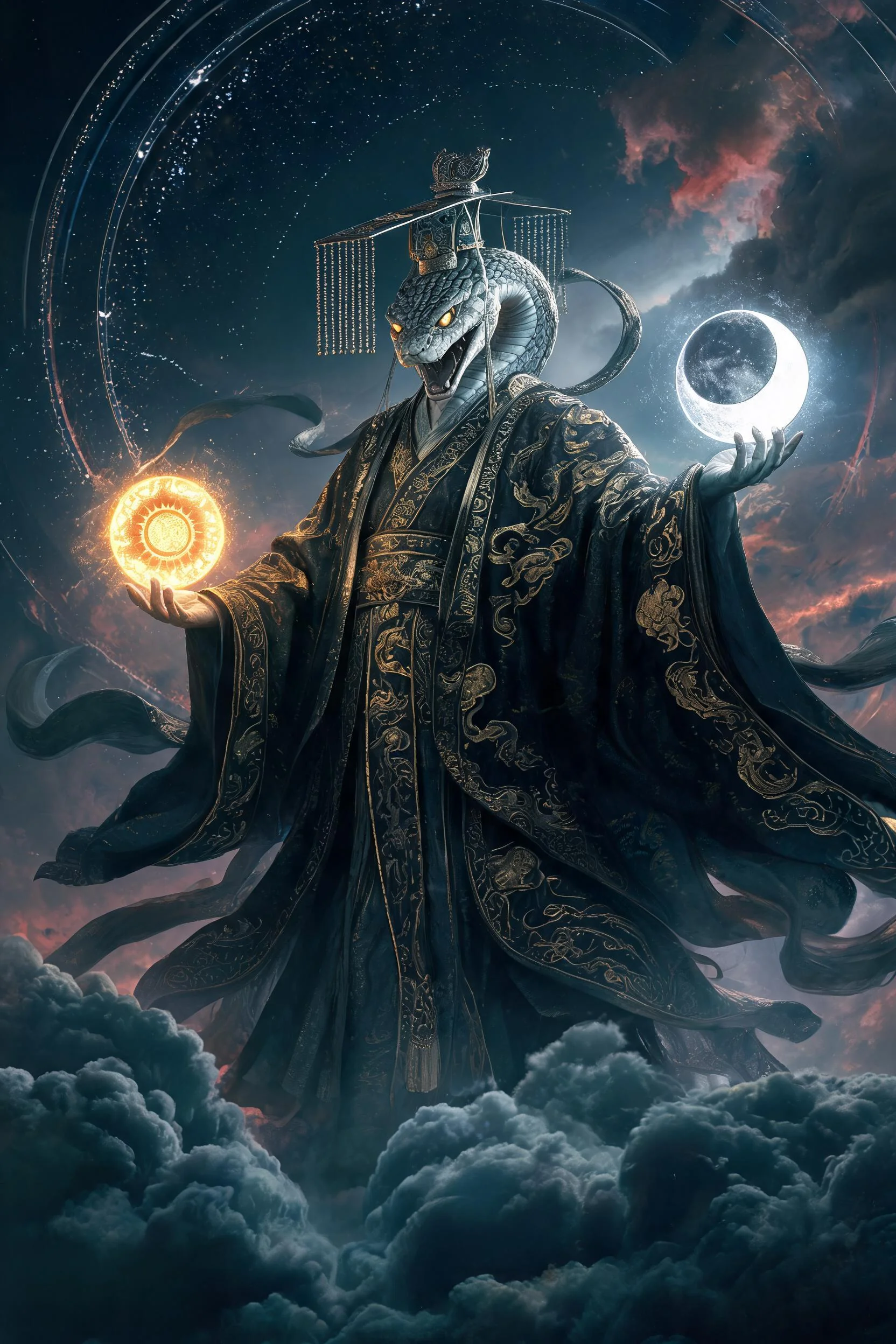
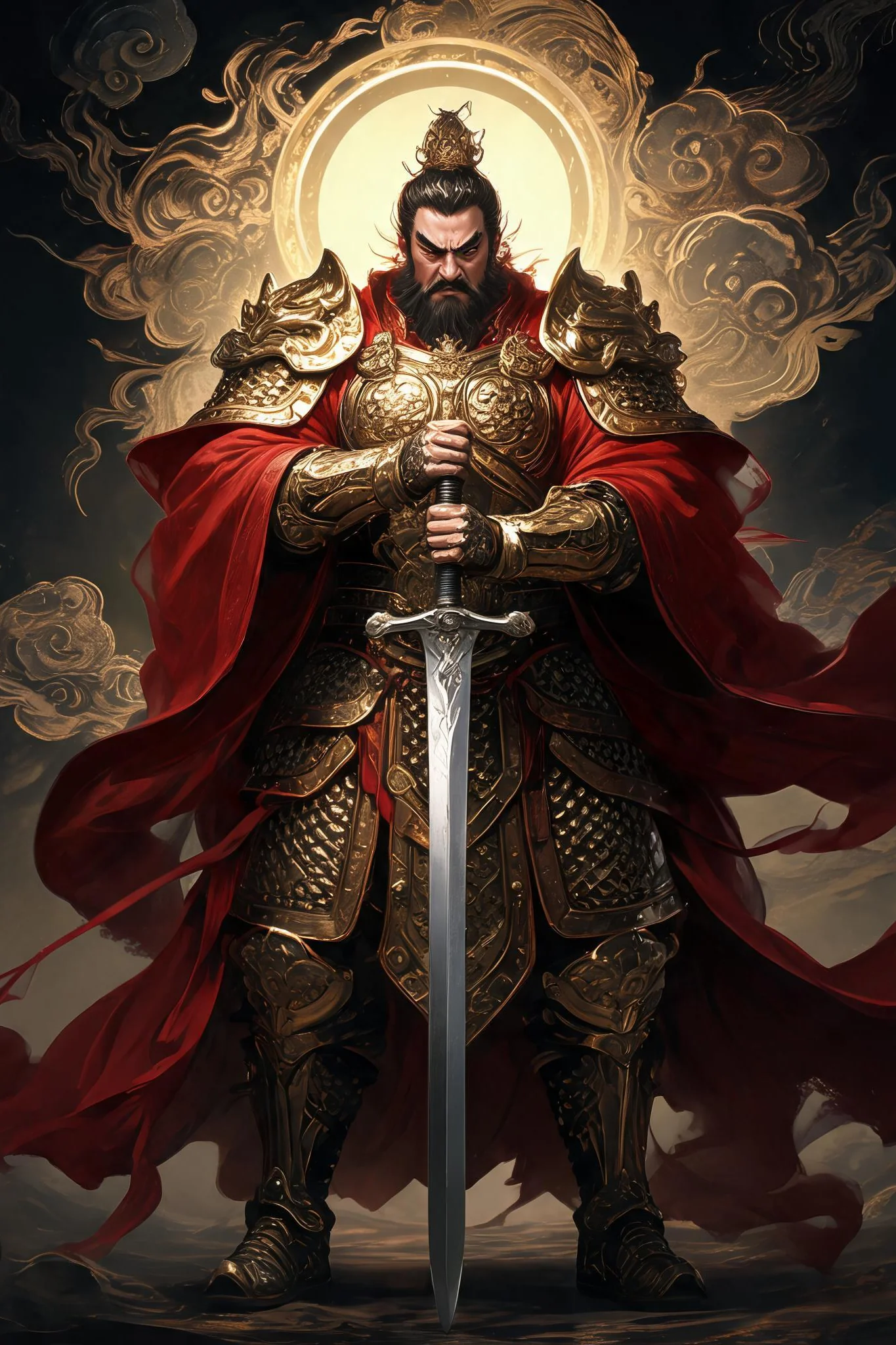
AI-generated likeness
Stars & Tai Sui
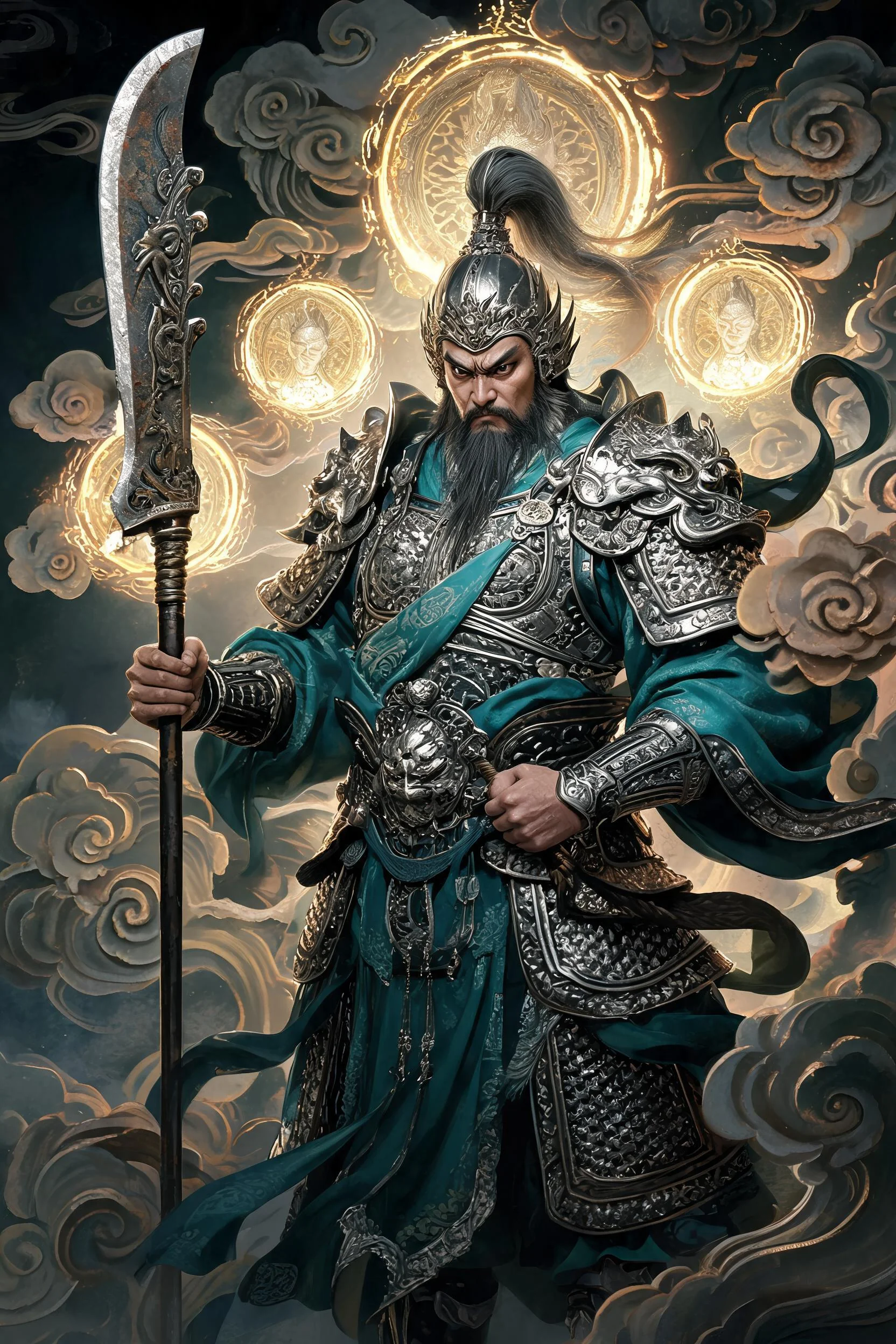
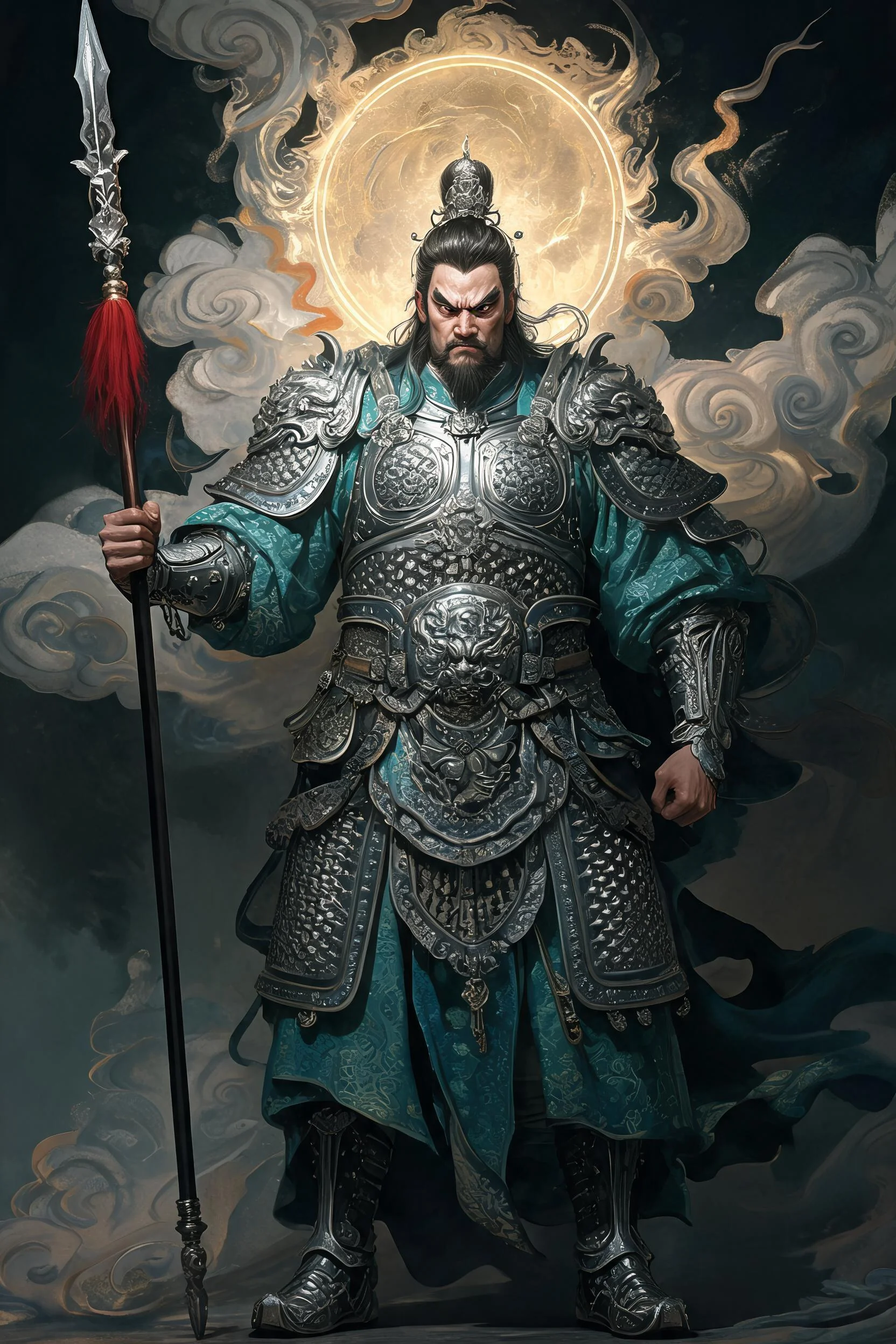
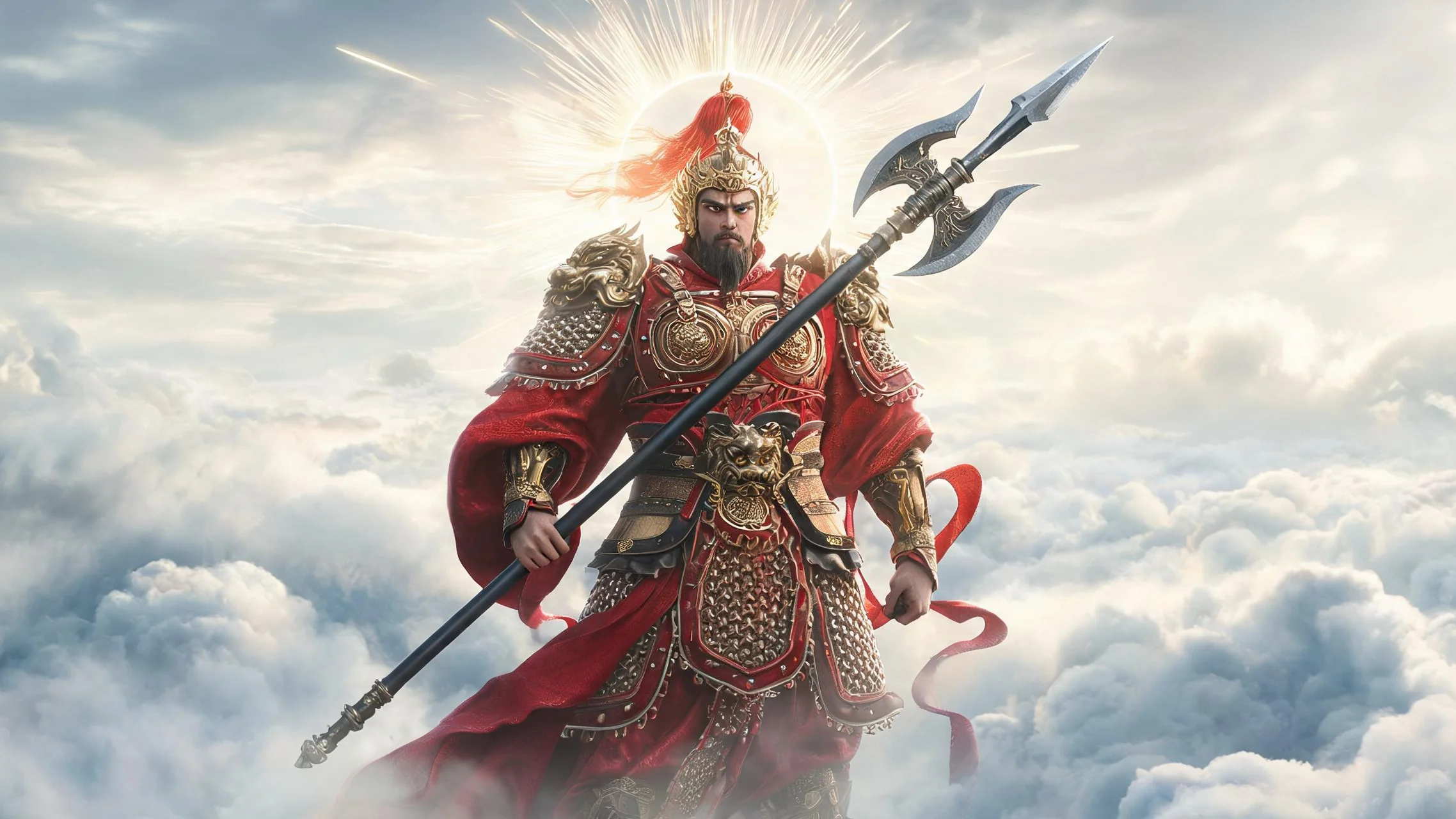
Rahu Star Lord
罗睺星君 · 羅睺星君
Jiaochu Jianxing Shen Luohou Xingjun (Star Deity of the Initial Conjunction)
Divine Office
- One of the Nine Luminaries and Four Remainders, governing eclipses and darkness
- Overseeing the timing of solar and lunar eclipses
- Alleviating adverse influences when the Rahu star afflicts an individual's annual astrological chart
- Safeguarding one's destiny chart to ensure stability through periods of misfortune
Origin & Legend
Luohou originated in ancient Indian astronomy as a conceptual 'shadow planet' representing the ascending lunar node; it entered the Daoist stellar pantheon via the eastward transmission of Buddhism and was elevated to the preeminent position among the Nine Luminaries and Four Remainders, bearing the title Jiaochu Xingjun (Star Lord of the Initial Conjunction). Ancient Chinese astronomers interpreted solar and lunar eclipses as occurrences wherein the Sun or Moon was obscured by Luohou—a celestial omen signaling heavenly admonition. Consequently, Daoist liturgical rites for disaster-aversion incorporated a dedicated altar for Luohou Xingjun, accompanied by scripture recitation and ritual prostrations to mitigate calamitous influences in the coming year. Though Luohou governs darkness and misfortune, Daoist cosmology holds that he fulfils a necessary, orderly function within the celestial bureaucracy; proper veneration of Luohou can thus transform adversity into auspiciousness. This belief reflects the traditional Chinese wisdom of observing celestial phenomena to regulate human affairs and reverently performing rites to avert disasters. Throughout history, astrologers calculating annual stellar influences have consistently advised individuals affected by Luohou’s transit across their natal chart to observe vegetarian fasts, perform ritual prostrations, and engage in extensive meritorious deeds—practices whose influence endures to this day.
 Health & Averting Calamity
 Health & Averting Calamity
 Safety & Blessing
 Children & Marriage
 Health & Averting Calamity
 Health & Averting Calamity
 Health & Averting Calamity
 Health & Averting Calamity