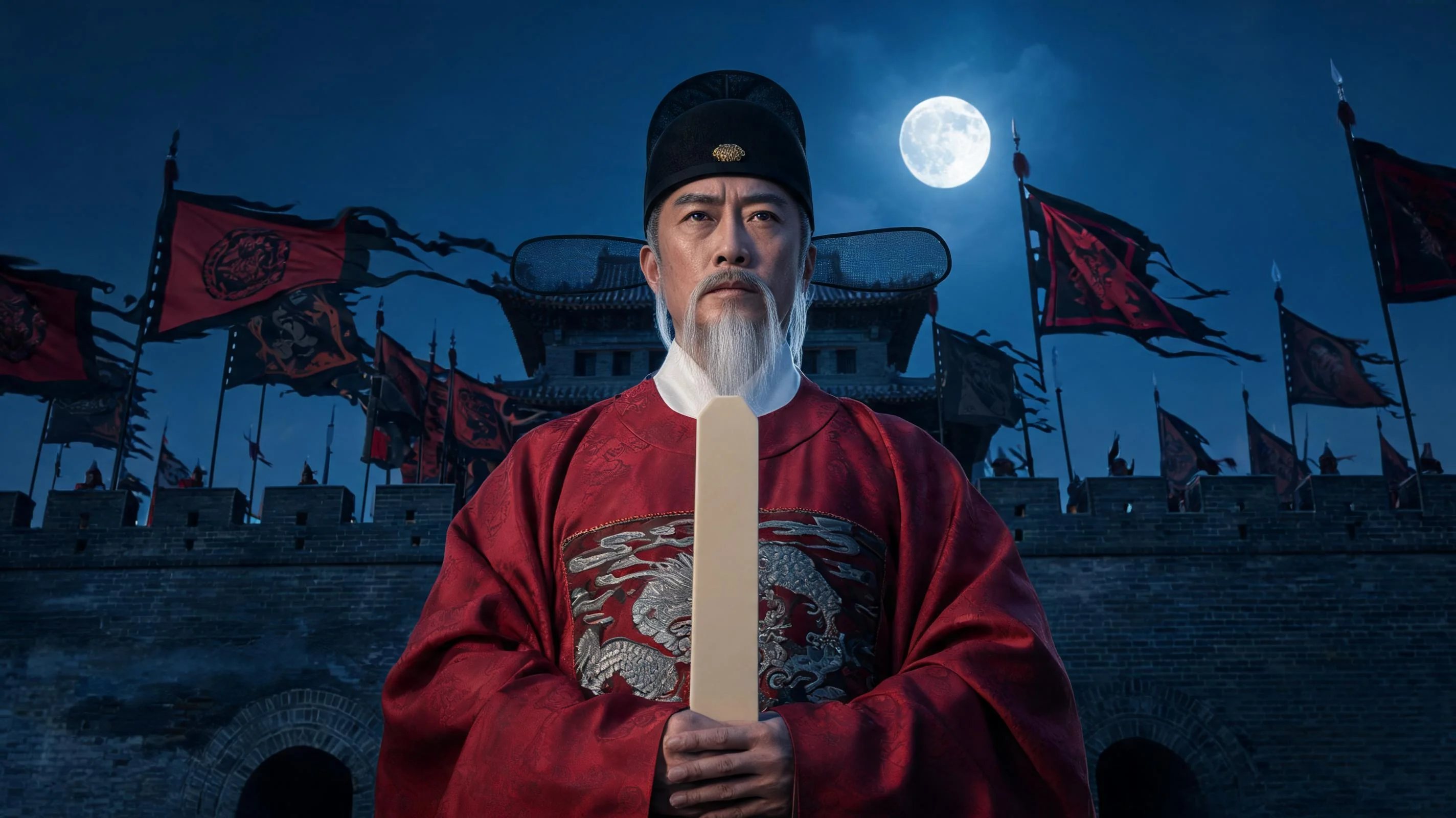
Yu Qian
于谦 · 于謙
Lord Yu Zhongsu (one of the Three Heroes of West Lake)
Divine Office
- safeguarding the peace and stability of the state
- protecting integrity and unwavering loyalty
- guarding the Hangzhou region
- granting deliverance from peril and restoring safety
Origin & Legend
Yu Qian (1398–1457) was a renowned Ming-dynasty statesman and scholar-official who passed the imperial examination during the Yongle reign. Renowned for his incorruptibility and austere personal conduct—famously described as having 'only empty sleeves'—he rose to prominence during the Tumu Crisis of 1449, when Emperor Yingzong was captured by the Oirat Mongols. Yu Qian resolutely opposed proposals to abandon Beijing and relocate the capital southward; instead, he supported the enthronement of the Jingtai Emperor and masterminded the successful defense of Beijing, repelling the Oirat forces and rescuing the dynasty from collapse. After Emperor Yingzong regained the throne in 1457, Yu Qian was falsely accused of treason and executed; his death provoked widespread public grief, and upon confiscating his property, officials found 'no surplus wealth' in his home. He was posthumously exonerated during the Chenghua reign and awarded the honorary title 'Zhongsu' ('Loyal and Solemn'). His poem 'Ode to Limestone'—'Though crushed to dust I do not fear, I shall leave purity behind in this world'—has echoed through the centuries. His tomb beside West Lake in Hangzhou stands in solemn dialogue with that of Yue Fei (General of Song-dynasty loyalist fame), and together with Zhang Cangshui, he is honoured as one of the 'Three Heroes of West Lake'. A temple dedicated to him also stands in Dongcheng District, Beijing, where he is revered by the people as a deity safeguarding the state.
 Wealth
 Safety & Blessing
 Wealth
 Safety & Blessing
 Studies & Exams
 Wealth
 Children & Marriage
 Wealth