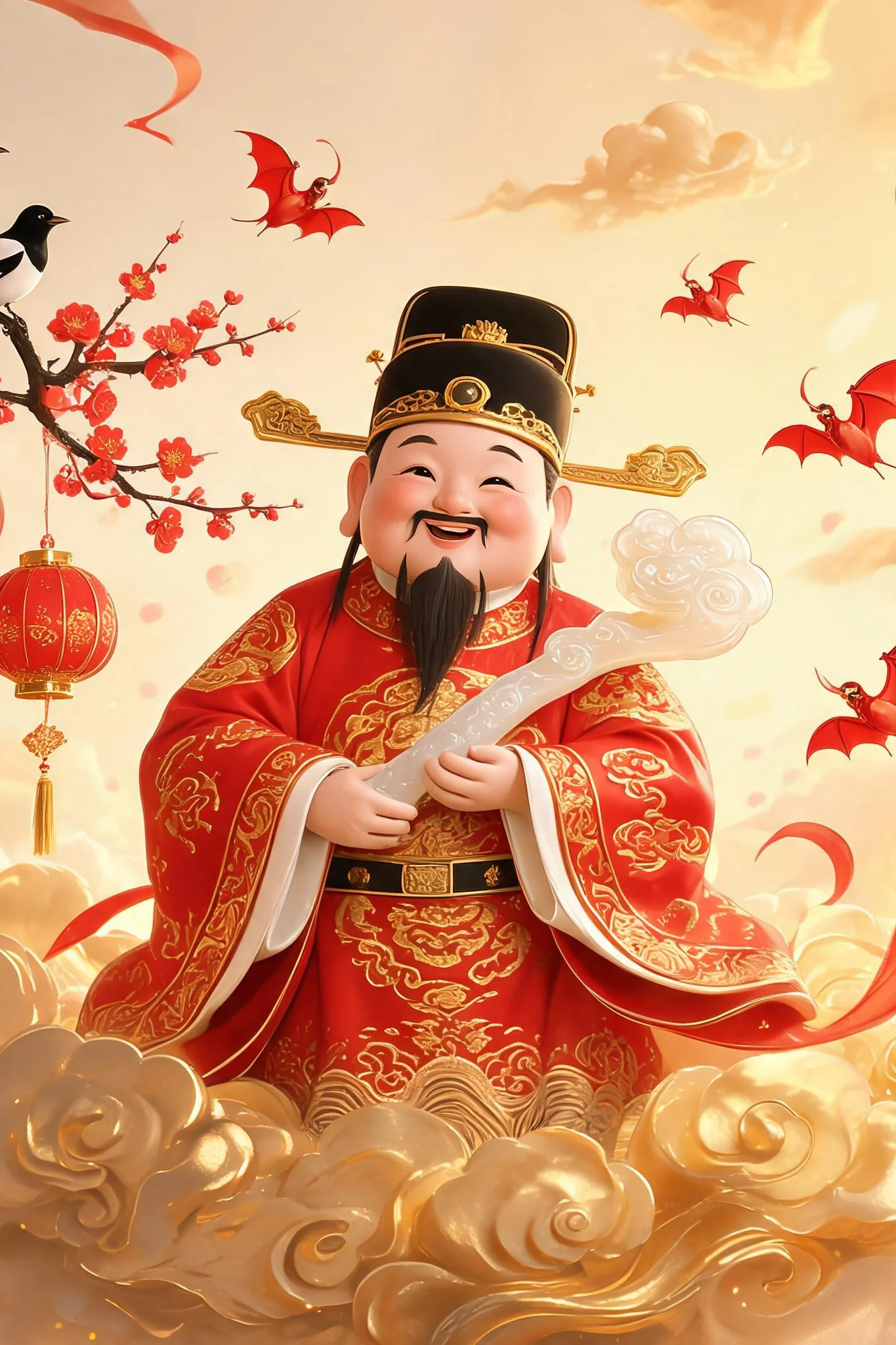
AI-generated likeness
Folk Deities
God of Joy
喜神 · 喜神
the Divine Embodiment of Auspiciousness and Celebration
Divine Office
- Oversees all joyous and celebratory affairs in the human realm, bestowing auspicious blessings and good fortune
- Guides wedding processions to approach from the auspicious direction associated with Xishen on the wedding day
- Is welcomed at the start of the Lunar New Year to ensure smoothness and fulfilment throughout the year
- Assists people in experiencing joy—whether through childbirth, wealth accumulation, or other felicitous events—imbuing all with auspicious vitality
Origin & Legend
Xishen is a folk deity exclusively presiding over joy, auspiciousness, and celebration—lacking formal temples or canonical statues, yet omnipresent in popular custom. In traditional weddings, determining Xishen’s auspicious direction was paramount: bridal palanquins had to arrive from that direction—a practice known as 'welcoming Xishen'—to avoid inauspicious clashes that might jeopardise marital harmony. In northern China, another custom arose: on the first day of the Lunar New Year, villagers would consult almanacs to identify Xishen’s location, then burn incense, set out offerings, and lead donkeys or horses toward that auspicious direction—symbolically escorting Xishen out of the home to usher in a year filled with delight and smooth fortune. Though absent from classical ritual texts and state-sponsored cults, Xishen remains deeply embedded in wedding rites and New Year observances, embodying ordinary people’s heartfelt aspirations for happiness in life’s most cherished moments—and stands as perhaps the most beloved and warmly embraced deity in Chinese folk religion.
 Wealth
 Safety & Blessing
 Wealth
 Safety & Blessing
 Studies & Exams
 Wealth
 Children & Marriage
 Wealth