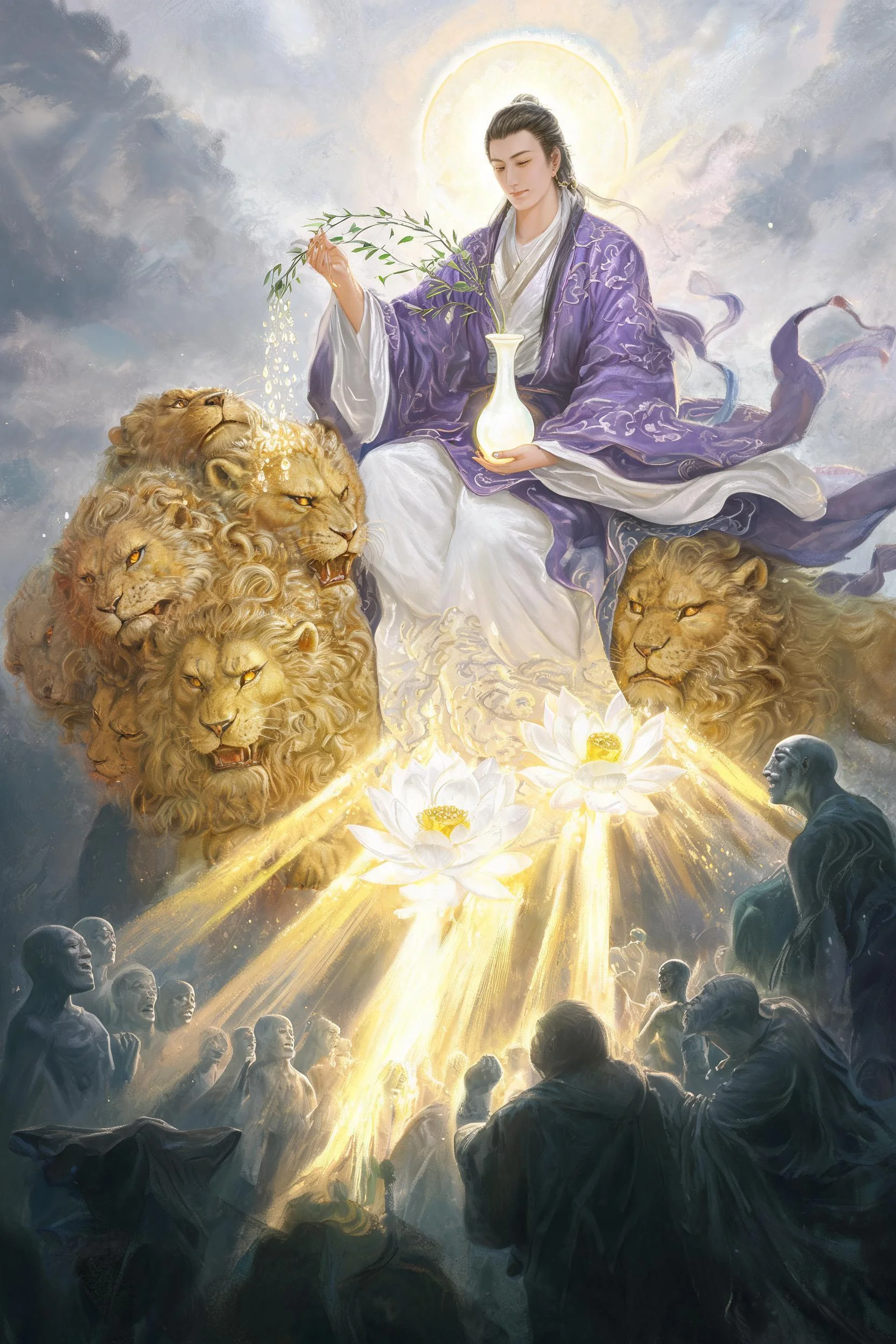
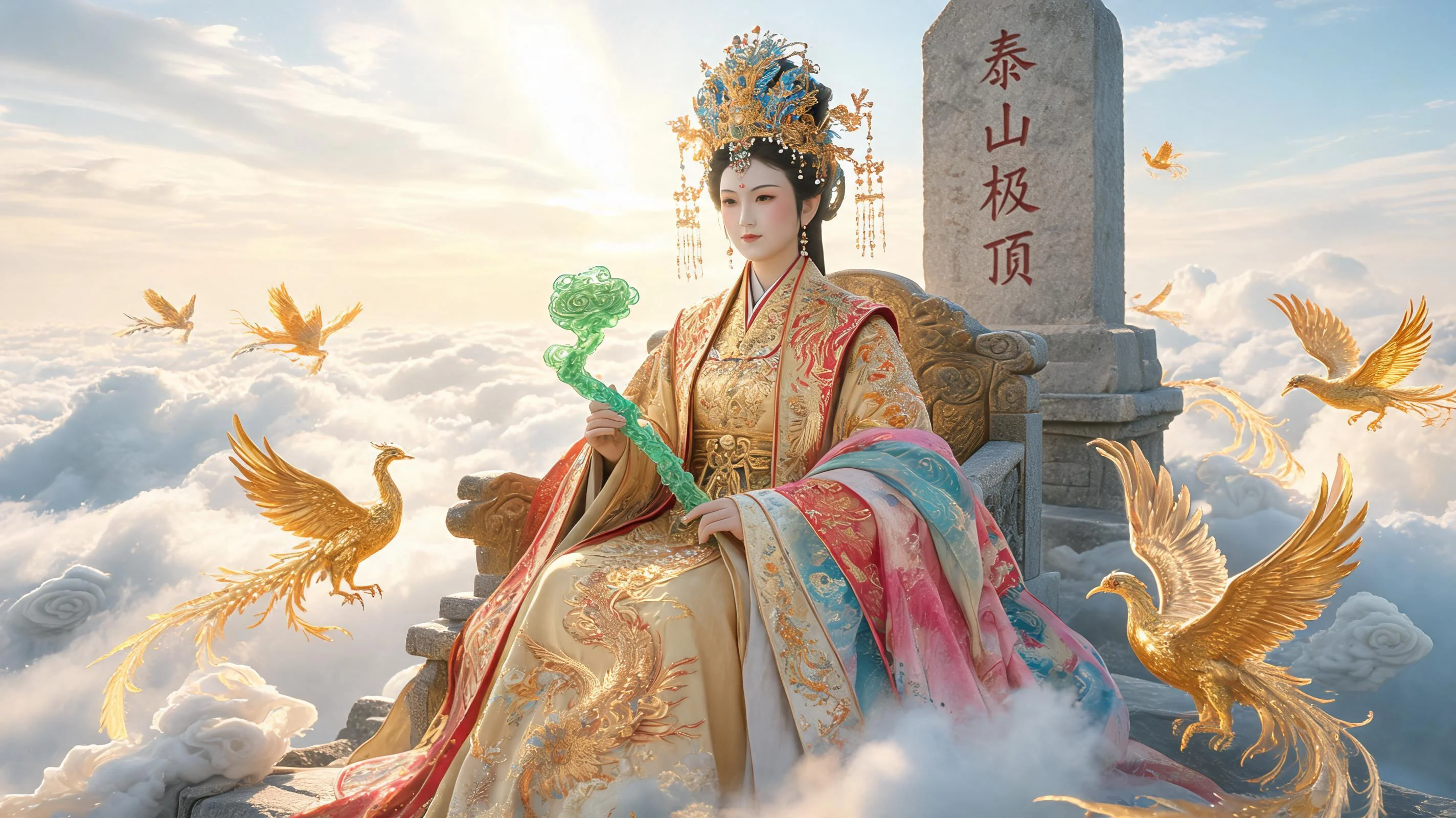
AI-generated likeness
Daoist Deities
Great Lord Taiyi Who Saves Suffering
太乙救苦天尊 · 太乙救苦天尊
Taiyi Jiuku Tianzun (Great Lord Taiyi Who Saves Suffering), Dongji Qinghua Dadi (Lord Qinghua of the Eastern Ultimate), and Xunsheng Fu Gan Tianzun (Heavenly Venerable Who Responds to Sounds and Feelings)
Divine Office
- Responding instantly to cries for help and rescuing those in distress
- Guiding departed souls to the Eastern Ultimate Realm of Eternal Bliss
- Manifesting as the Ten Directions Jiuku Tianzun to save sentient beings
- Alleviating the tribulations of all beings and delivering souls from the netherworld
Origin & Legend
Taiyi Jiuku Tianzun is the supreme Daoist deity of salvation from suffering, residing in the Eastern Ultimate Realm of Eternal Bliss and revered under the title Dongji Qinghua Dadi (Lord Qinghua of the Eastern Ultimate). Daoist scriptures state that he dwells in the Ziwei Palace in Heaven, manifests as the Ten Directions Jiuku Tianzun on Earth, and presides as the Yanggu Divine King in the watery realms; from a single primordial qi he emanates three bodies, pervading all ten directions—whenever sentient beings suffer hardship and invoke his sacred name, the Tianzun immediately responds to their cries and feelings, rescuing and liberating them. His most renowned merit lies in the salvation of departed souls: Daoist liturgical rites such as the Iron Pot Food-Offering Ceremony and the Qingxuan Jilian Ritual centre upon the invocation of Taiyi Jiuku Tianzun, including practices like releasing the flaming mouth (Yankou) and breaking open the hells, all aimed at guiding the deceased to rebirth in the Eastern Ultimate Realm of Eternal Bliss. The roar of his mount—the nine-headed lion—has the power to shatter the gates of hell. His sacred name is recited during folk funerary rites and the Ghost Festival (Zhongyuan) ceremonies.
 Safety & Blessing
 Safety & Blessing
 Health & Averting Calamity
 Studies & Exams
 Children & Marriage
 Warding Off Evil
 Safety & Blessing
 Children & Marriage