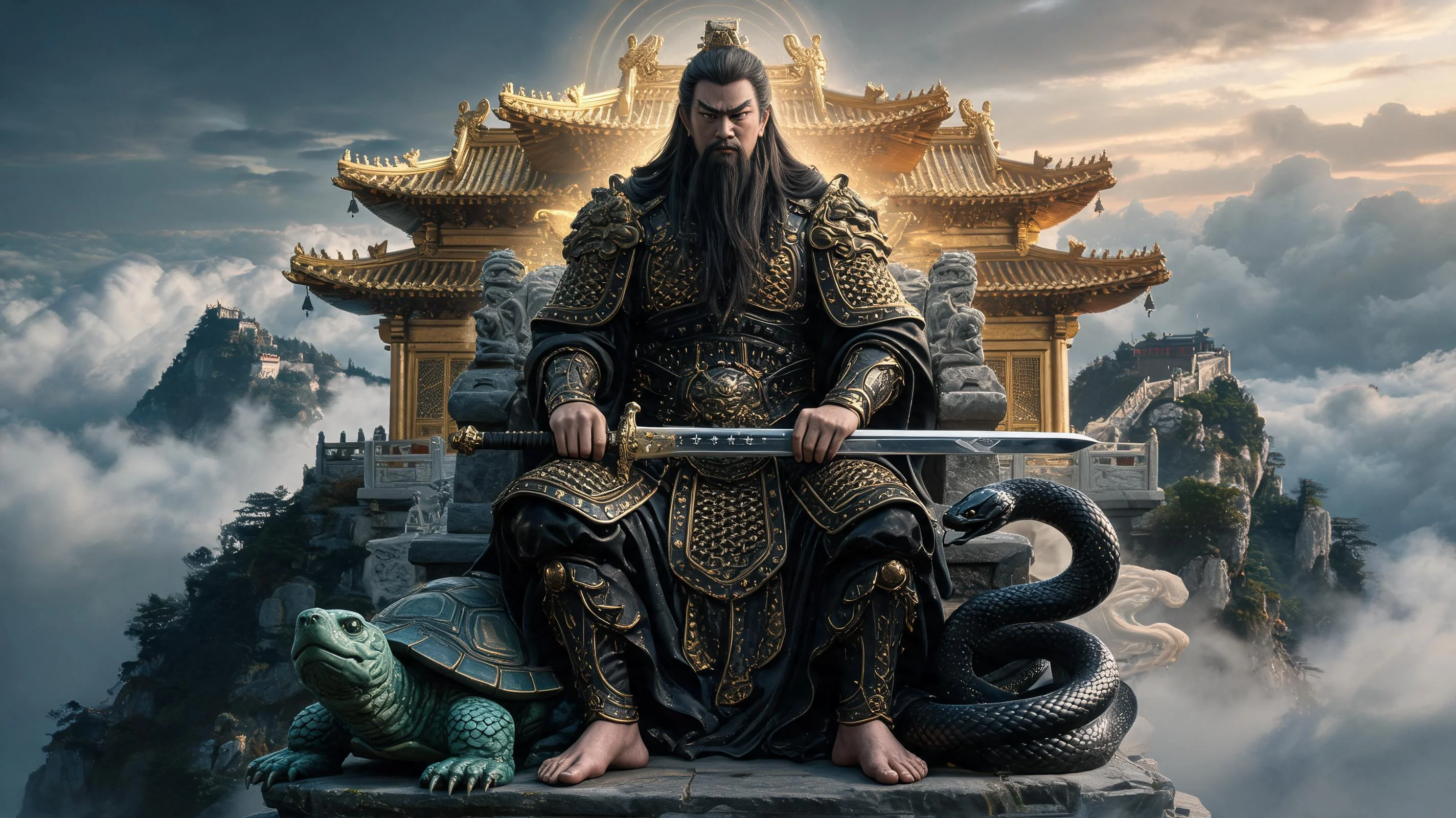
Zhenwu the Perfected Warrior
真武大帝 · 真武大帝
Lord Xuantian the Supreme Deity, Lord Zhenwu the Divine and Responsive Holy Sovereign Who Pacifies Heaven
Divine Office
- Guarding the northern quarter and presiding over the office of Zhenwu, subduing demons and vanquishing malevolent forces
- Governing matters of water and fire, safeguarding the safety of ships and voyages
- Expelling evil spirits and binding spectres, protecting the nation and blessing the people, and pacifying homes and dwellings
- Bestowing blessings upon martial prowess and serving as the principal deity enshrined at Mount Wudang
Origin & Legend
Zhenwu the Perfected Warrior originally personified the Northern Seven Mansions among the Twenty-Eight Lunar Lodges, known as Xuanwu—the Black Tortoise, one of the Four Celestial Symbols. During the Song dynasty, his name was changed from Xuanwu to Zhenwu to avoid the taboo character 'Xuan' in the posthumous title of Emperor Zhaoling’s imperial ancestor, Zhao Xuanlang, and he gradually evolved into a fully humanized deity. Legend holds that he was once the crown prince of the Pure Joy Kingdom, who cultivated for forty-two years on Mount Wudang before attaining immortality and ascending to heaven; thereafter he assumed guardianship of the northern realm, appearing with dishevelled hair, bare feet, golden armour, dark-blue robes, and standing upon the Turtle and Snake Generals. During the Ming dynasty, Emperor Yongle’s fervent veneration led to the large-scale construction of temples and monasteries across Mount Wudang, propelling Zhenwu worship to its zenith; he was then formally honoured as 'Xuantian Shangdi' (the Supreme Deity of the Dark Heaven) and 'Dao Mo Tian Zun' (the Celestial Lord Who Subdues Demons). In popular belief, he expels evil influences, safeguards households, and ensures safe passage on rivers and seas—making him especially revered by canal boatmen, sailors, and river traders. His birthday falls on the 3rd day of the 3rd lunar month; on this day, pilgrims throng Mount Wudang in vast numbers, and his incense offerings have continued unbroken to the present day.
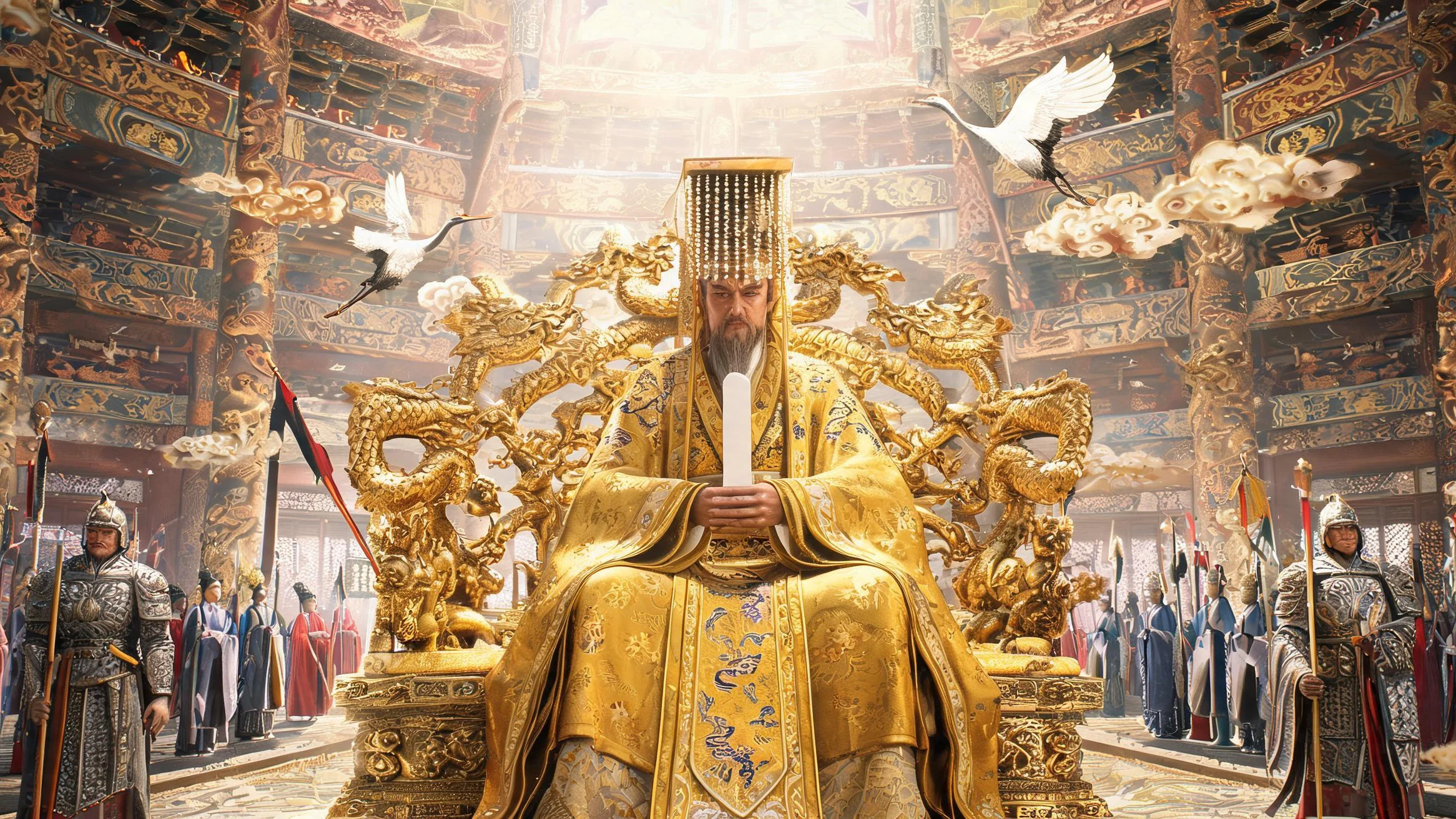 Safety & Blessing
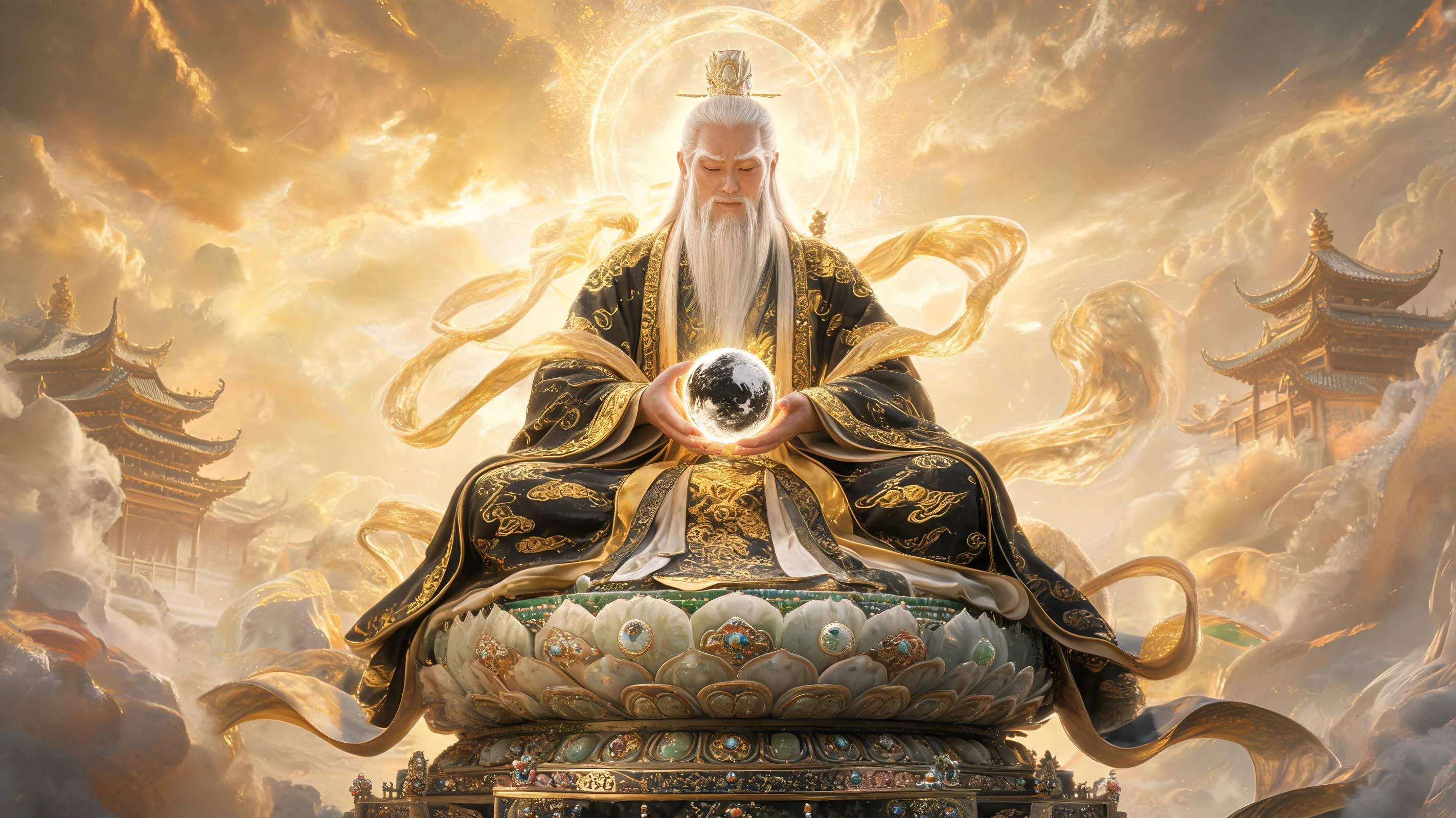 Safety & Blessing
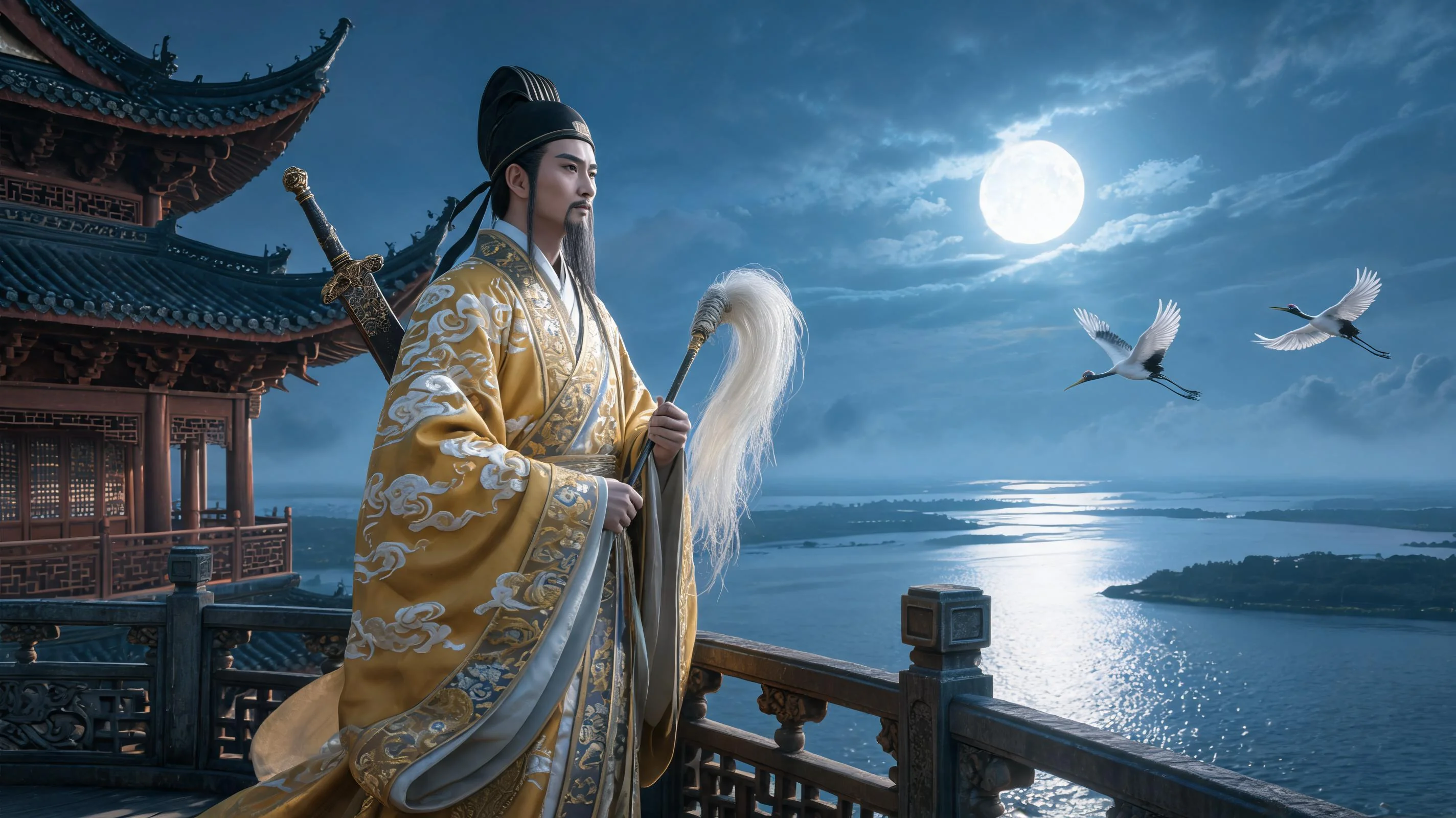 Health & Averting Calamity
 Studies & Exams
 Children & Marriage
 Safety & Blessing
 Children & Marriage
 Safety & Blessing