
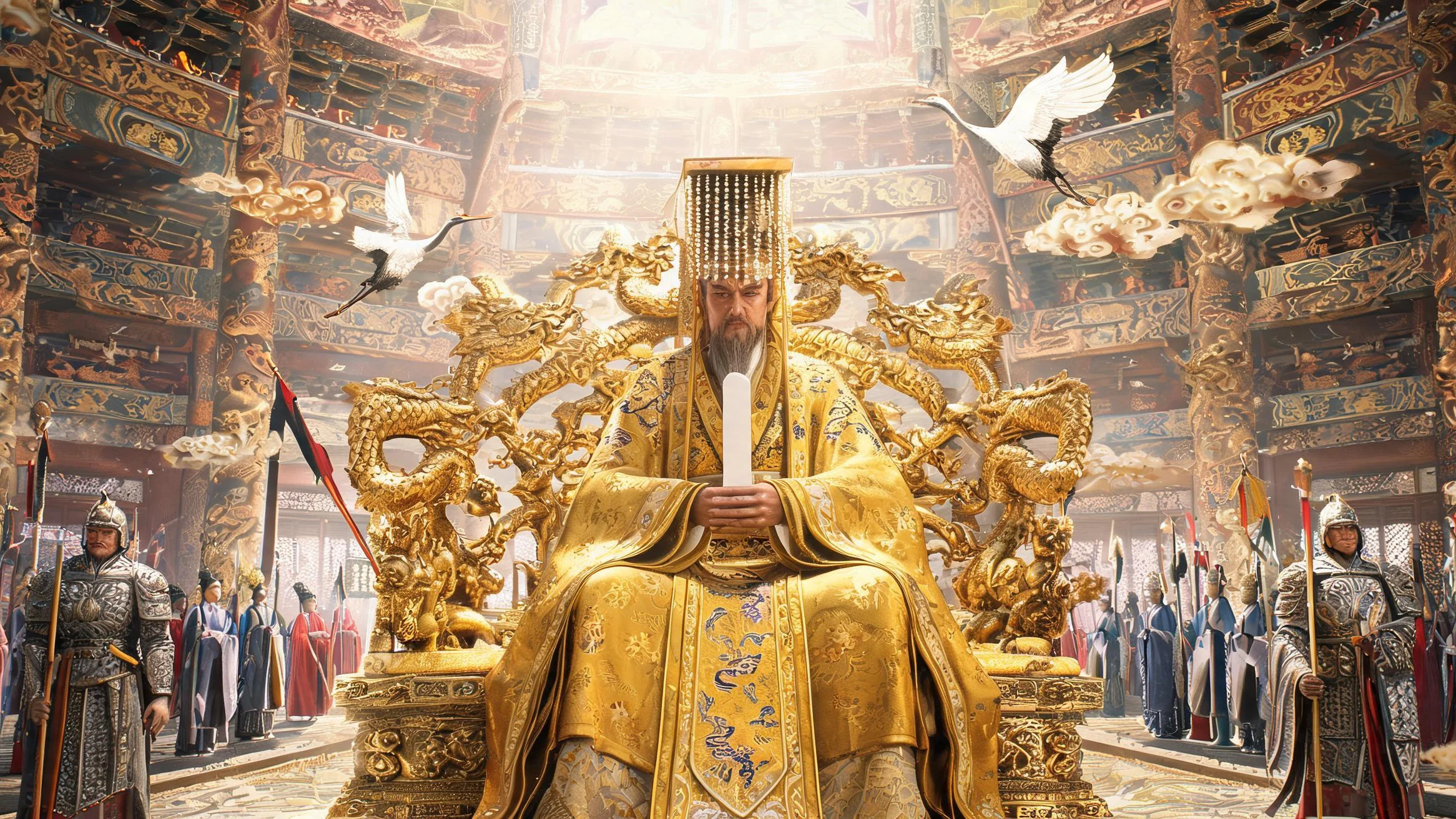
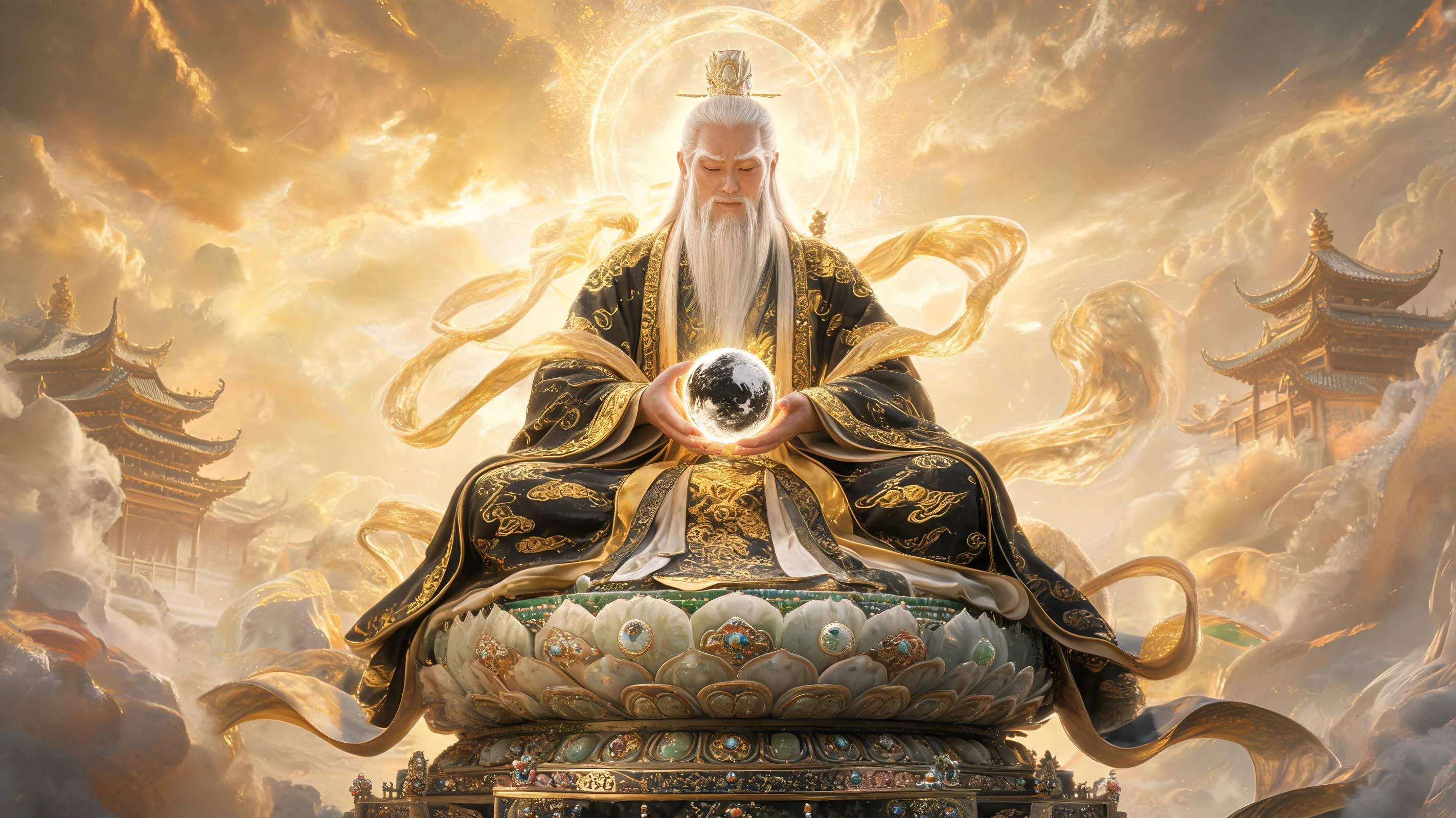
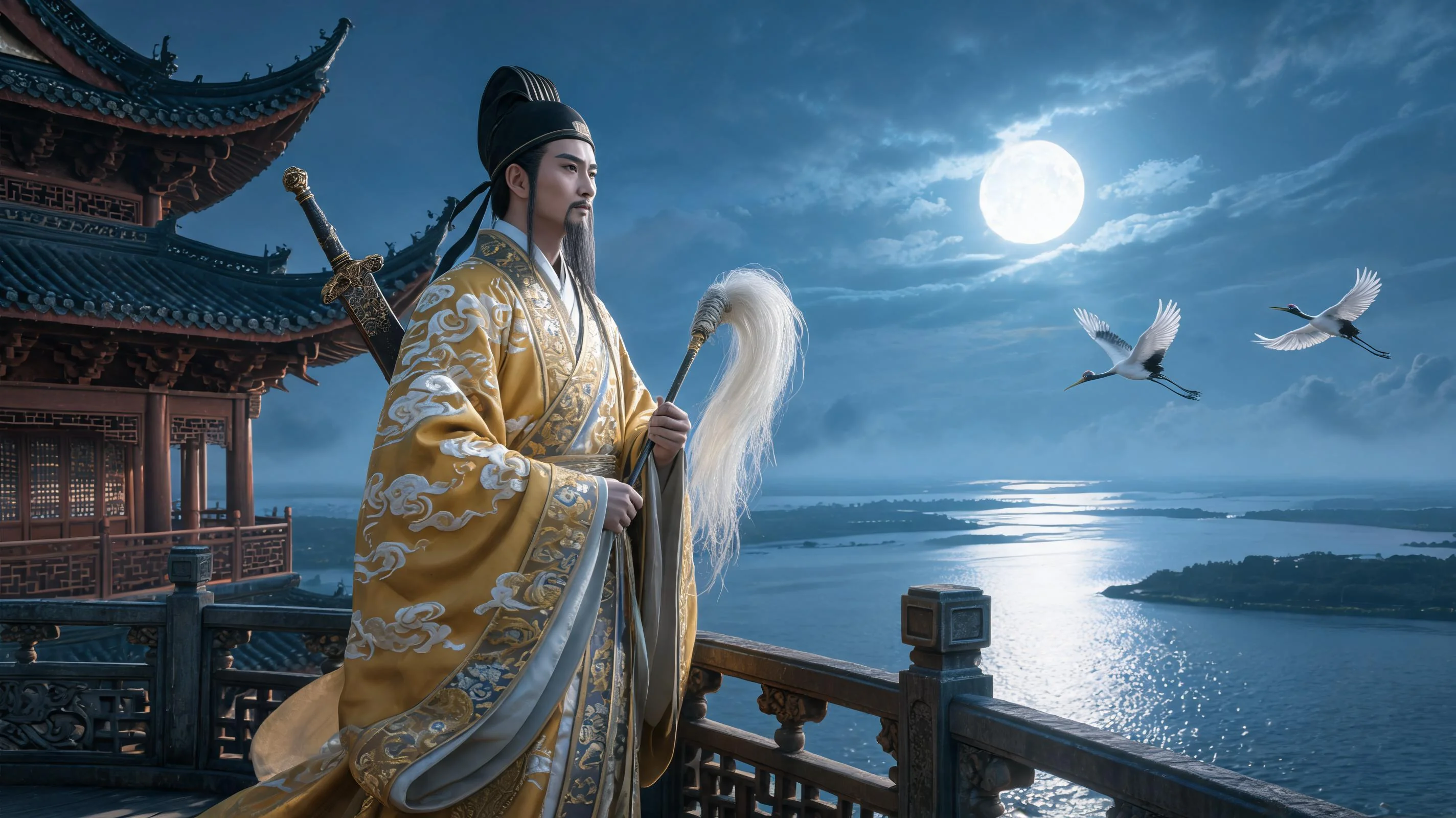
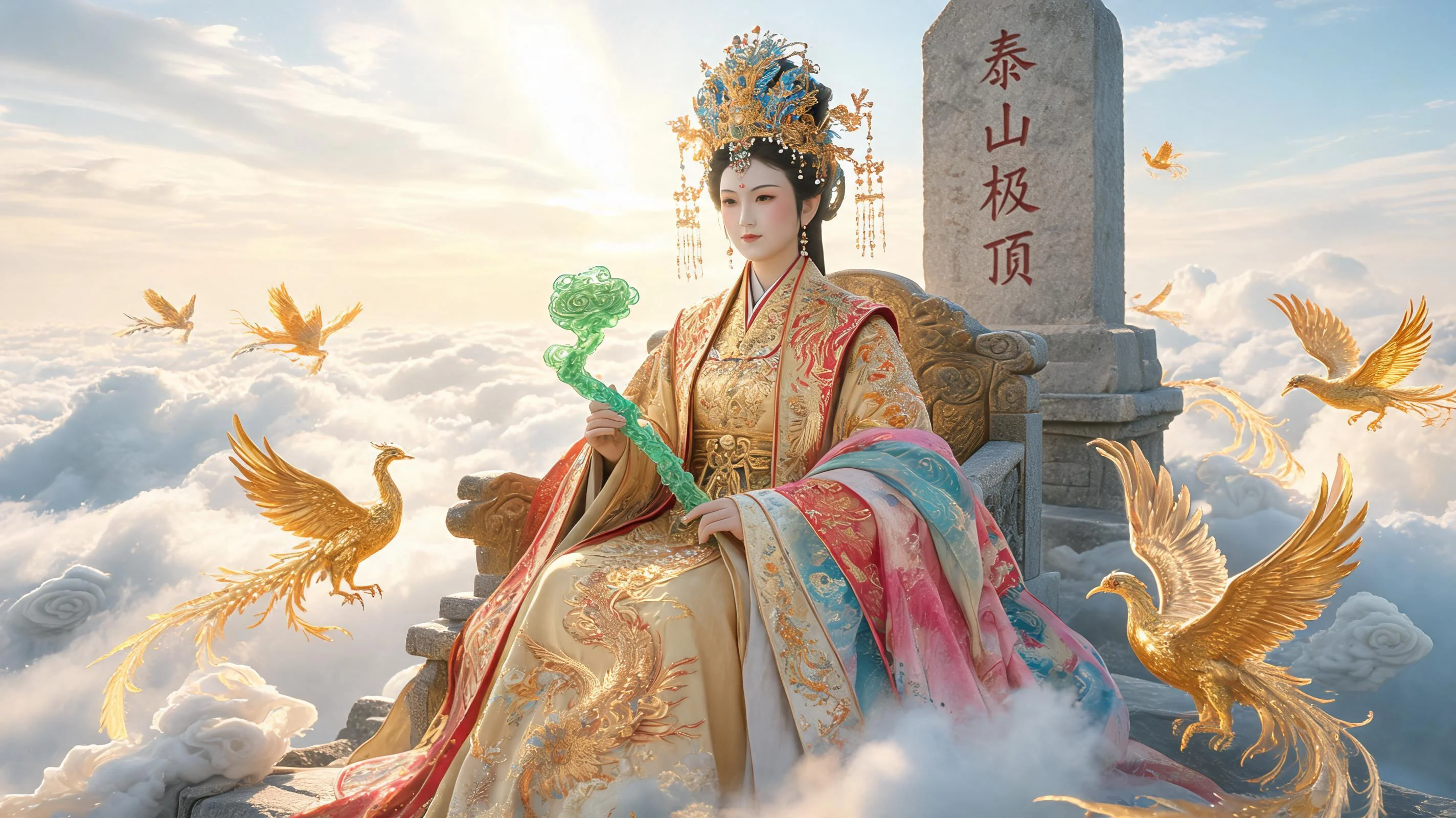
Emperor Wenchang
文昌帝君 · 文昌帝君
Zhenjun Wenchang Dijun, Sovereign Lord of Enlightenment from the Nine Heavens, Director of Literary Fortune and Imperial Examinations
Divine Office
- Governing literary fortune and the imperial examination system; presiding over scholarly achievement, official rank, wealth, and emolument
- Protecting students and candidates to ensure smooth examinations and success in attaining top ranks on the imperial examination list
- Recording human virtue and vice, and administering emolument rewards for meritorious conduct
- Promoting moral instruction and virtuous conduct, transforming ignorance and awakening wisdom
Origin & Legend
The Wenchang cult synthesises star-worship—centred on the Six Stars of Wenchang—and the local legend of Zhang Yazi, the deified god of Zitong. Zhang Yazi was a filial son of Shu during the Jin dynasty who died in battle while serving the Jin court; villagers erected a temple in his honour at Qiqu Mountain in Zitong. During the Tang and Song dynasties, he received repeated imperial enfeoffments as Yingxian Wang (King of Heroic Manifestation). Legends recounting his spiritual interventions in examination halls—protecting candidates and ensuring their success—led the Yuan dynasty’s Emperor Renzong, during the Yanyou era (1314–1320), to bestow upon him the title Fuyuan Kaika Wenchang Sulu Hongren Dijun (Grand Benevolent Emperor Wenchang, Aiding Heaven’s Origins and Spreading Enlightenment, Director of Literary Fortune). This formalised the fusion of Zhang Yazi’s cult with the astral worship of the Wenchang constellation. During the Ming and Qing dynasties, when the imperial examination system reached its zenith, Wenchang Temples were established in virtually every prefectural and county seat. On the 3rd day of the 2nd lunar month—the deity’s birthday—students and scholars gathered to burn incense and offer prayers, a practice that flourished into a widespread cultural tradition; even today, temples dedicated to Wenchang remain thronged with devotees during examination seasons.
 Safety & Blessing
 Safety & Blessing
 Health & Averting Calamity
 Children & Marriage
 Warding Off Evil
 Safety & Blessing
 Children & Marriage
 Safety & Blessing