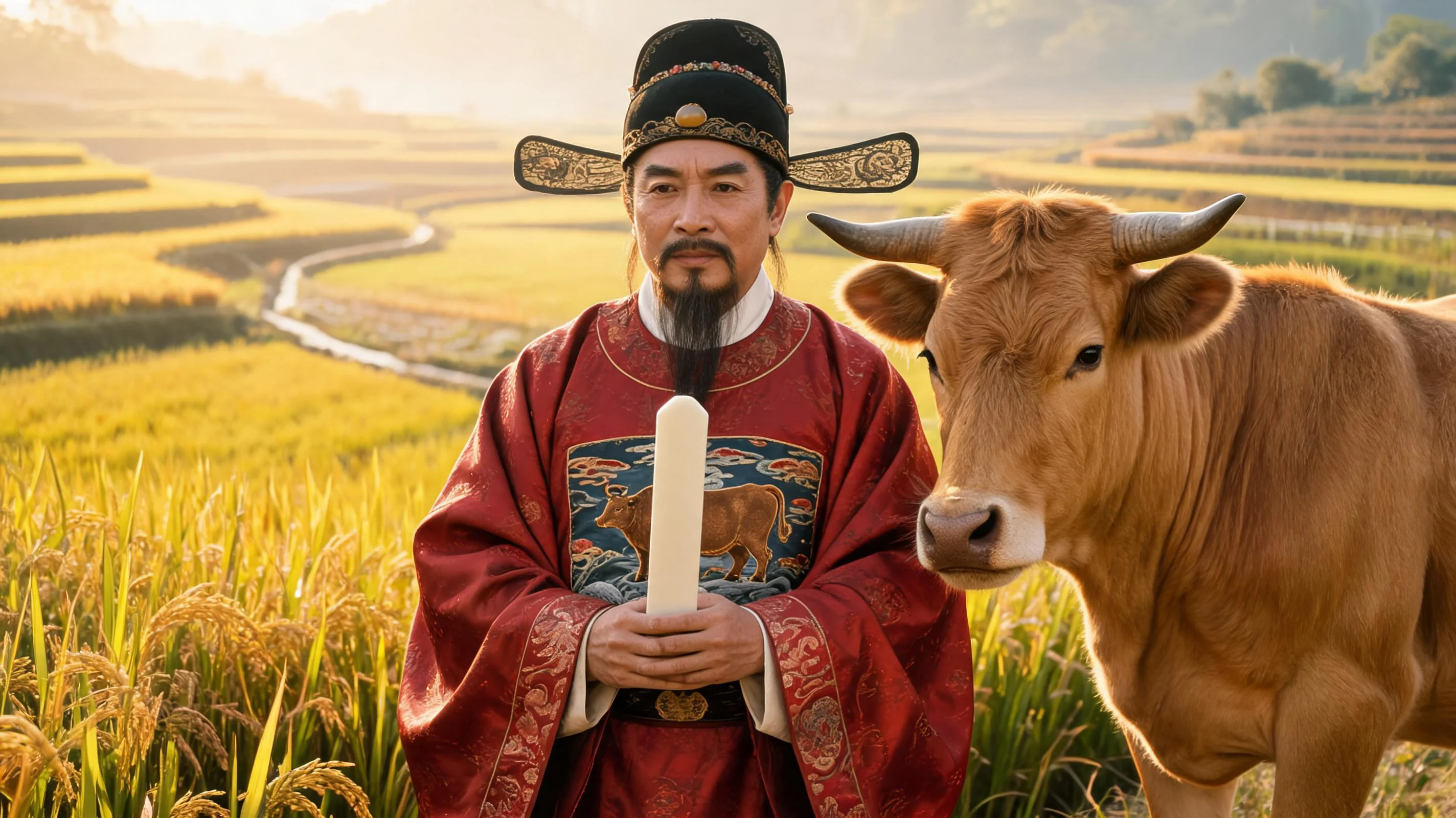
Niu Wangye (Ox God)
牛王爷 · 牛王爺
Great Emperor Niu Wang, Deity of Agricultural Prosperity
Divine Office
- Ensuring the robust health of plough oxen
- Guarding the prosperity of all six domestic animals
- Protecting spring ploughing and agricultural cultivation
- Punishing those who cruelly mistreat livestock
Origin & Legend
Niu Wangye—the Ox God—is a folk deity venerated for safeguarding plough oxen. As oxen formed the very foundation of traditional agriculture, imperial edicts across dynasties strictly forbade the private slaughter of working oxen; in return, common people worshipped the Ox God to repay these animals’ year-round toil. Legends concerning his origin vary: some identify him with Ran Boniu, a Confucian disciple of the Spring and Autumn period; others trace him to an ancient deity with an ox’s head and human body. On the 8th day of the 4th lunar month—celebrated as Niu Wangye’s Birthday or the Ox God Festival—ethnic groups including the Gelao, Buyi, and Zhuang grant their plough oxen a day of rest and feed them black glutinous rice and sticky rice cakes as tokens of appreciation, embodying a profound, tender bond between humans and their working oxen. In former times, Niu Wang Temples were widespread throughout China; the Niuyang Temple at Chengdu’s Niushikou was especially renowned for its vigorous incense offerings, where farmers prayed for thriving livestock and disease-free, disaster-free plough oxen.
 Wealth
 Safety & Blessing
 Wealth
 Safety & Blessing
 Studies & Exams
 Wealth
 Children & Marriage
 Wealth