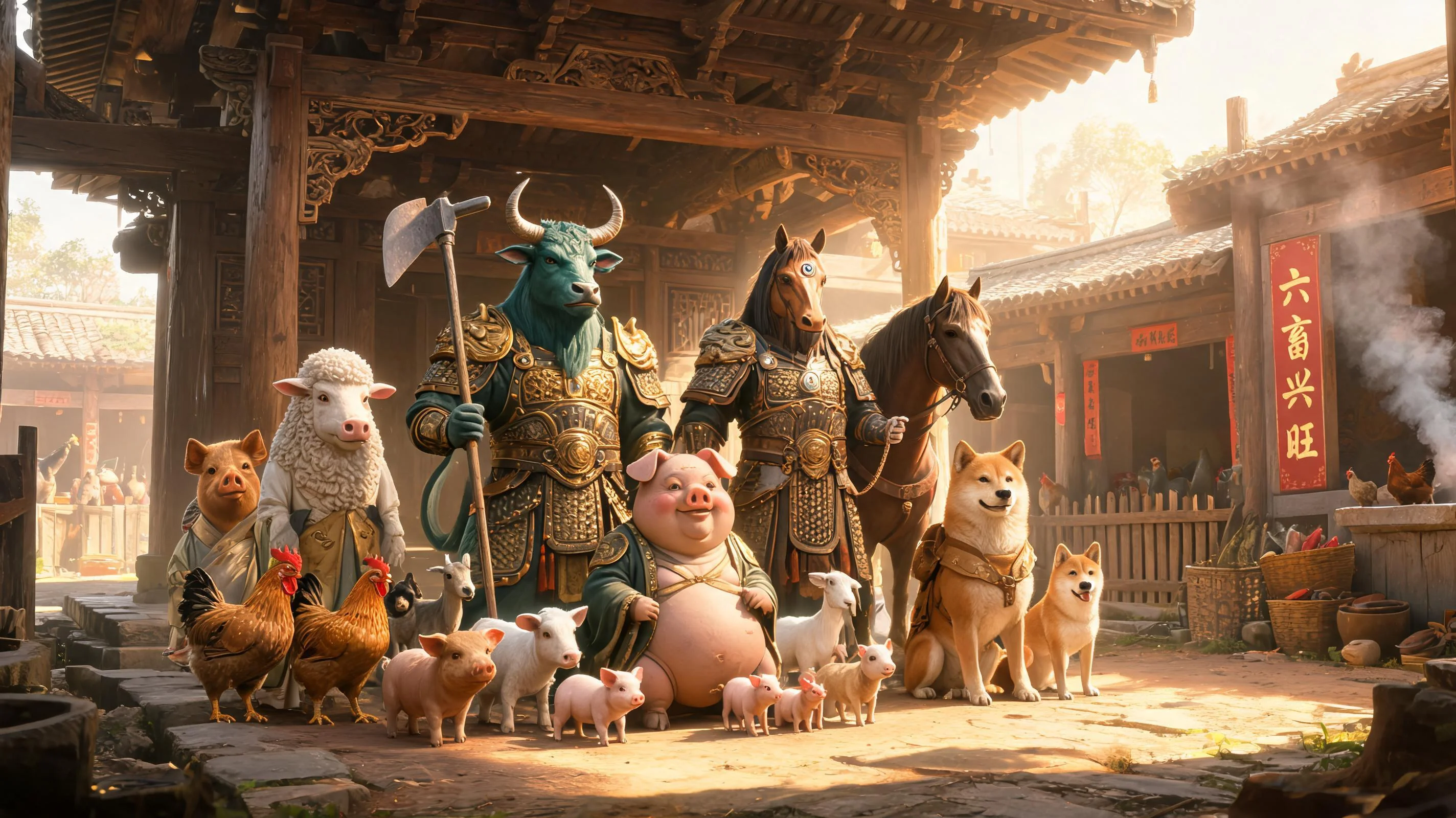
Gods of Six Livestock
六畜神 · 六畜神
Guardian Deities of Thriving Livestock
Divine Office
- Ensuring the prosperity and vitality of cattle, horses, pigs, sheep, chickens, and dogs
- Preventing livestock epidemics and mortality
- Safeguarding farmers’ income from subsidiary agricultural enterprises
- Protecting barns, stables, pens, and enclosures from harm
Origin & Legend
Horses, cattle, sheep, chickens, dogs, and pigs—the 'Six Livestock'—constituted the most vital assets of traditional Chinese farming households. Folk belief holds that each livestock species is overseen by its own tutelary deity; collectively, they are worshipped as the Gods of Six Livestock, though some communities practice separate veneration of the Ox King, Horse King (also known as 'Lord Mawang'), Pig-Pen Deity, Chicken-Coop Deity, and others. From the 1st to the 6th day of the 1st lunar month, popular custom designates each day respectively for chickens, dogs, pigs, sheep, cattle, and horses; clear, warm weather on a given day is believed to portend prosperity for that particular animal. When constructing new barns or enclosures, farmers select an auspicious date; the gate is adorned with the horizontal scroll 'Six Livestock Thriving', and during festivals, incense and ritual meals are offered at the enclosure to petition divine protection against disease and to ensure healthy reproduction and robust growth. The worship of the Gods of Six Livestock directly reflects the socioeconomic realities of agrarian life in traditional China.
 Wealth
 Safety & Blessing
 Wealth
 Safety & Blessing
 Studies & Exams
 Wealth
 Children & Marriage
 Wealth