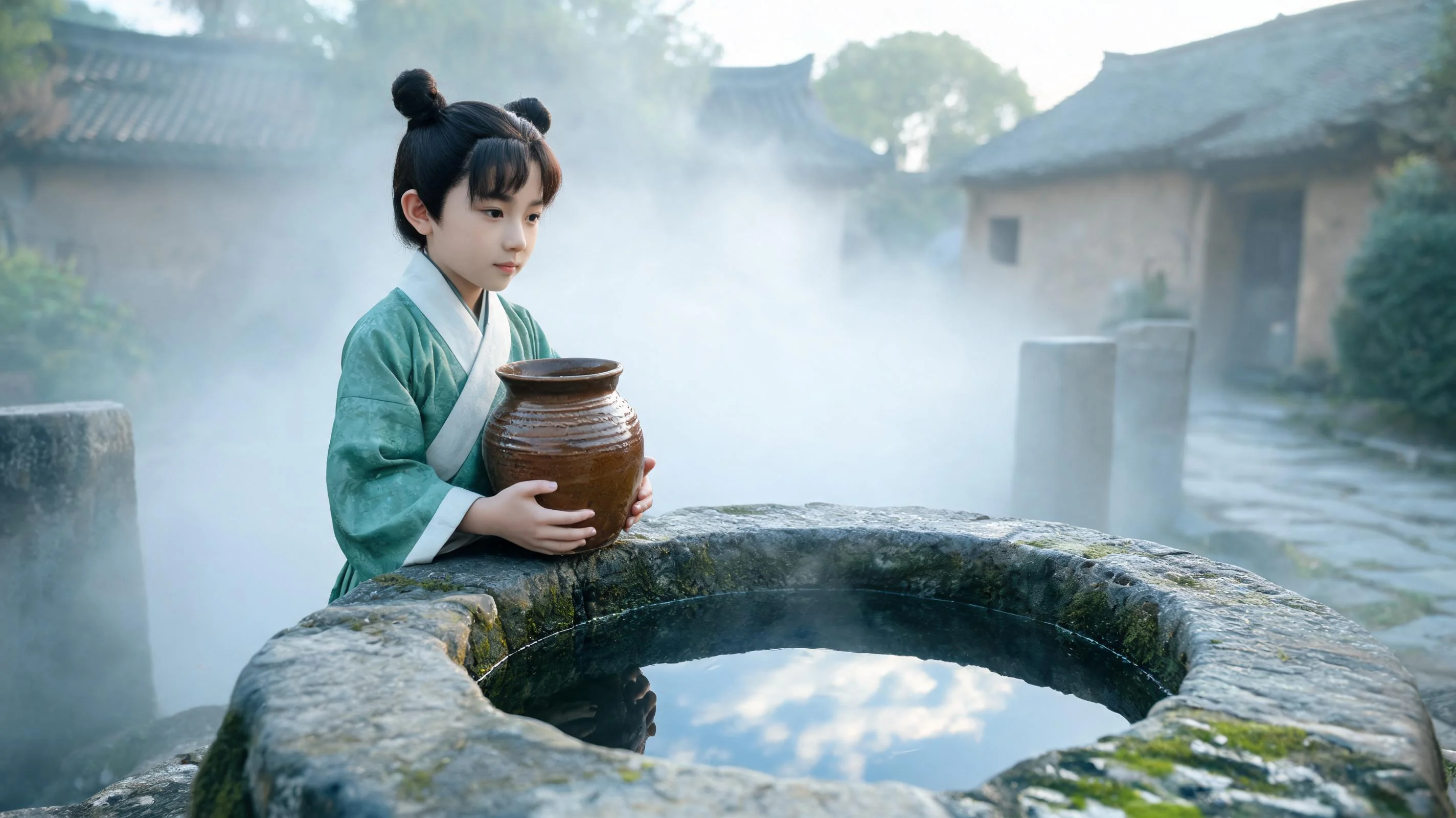
Well God
井神 · 井神
Jingquan Tongzi (Well Spring Boy) / Jing Longwang (Well Dragon King)
Divine Office
- Governing the water of wells and springs, regulating its clarity, abundance, and scarcity
- Safeguarding the safety of those drawing water and preventing drowning accidents in wells
- Overseeing the nourishment of local water sources for a village or neighborhood
- Receiving ritual offerings during the New Year’s Eve well-sealing ceremony and the Third Day of the First Lunar Month well-opening ceremony
Origin & Legend
Well water was the lifeblood of premodern villages, prompting widespread veneration of a Well God—commonly called Jingquan Tongzi (Well Spring Boy) or Jing Longwang (Well Dragon King). Folk custom dictated sealing the well with red paper on Chinese New Year’s Eve to allow the Well God to rest during the festivities; on the Third or Fifth Day of the First Lunar Month, families would burn incense, reopen the well, draw the first bucket of water as an offering to the deity, and only then begin using it for daily needs. Newly dug wells, sudden changes in water quality or flow, or incidents of people falling into wells all required special rites to appease the Well God. Adults routinely warned young children not to play near or peer into wells, lest they offend the deity. Though never among the most prominent deities, the Well God stood for millennia as one of the most intimate, everyday protectors of village life—his cult gradually fading only with the advent of piped municipal water supplies.
 Wealth
 Safety & Blessing
 Wealth
 Safety & Blessing
 Studies & Exams
 Wealth
 Children & Marriage
 Wealth