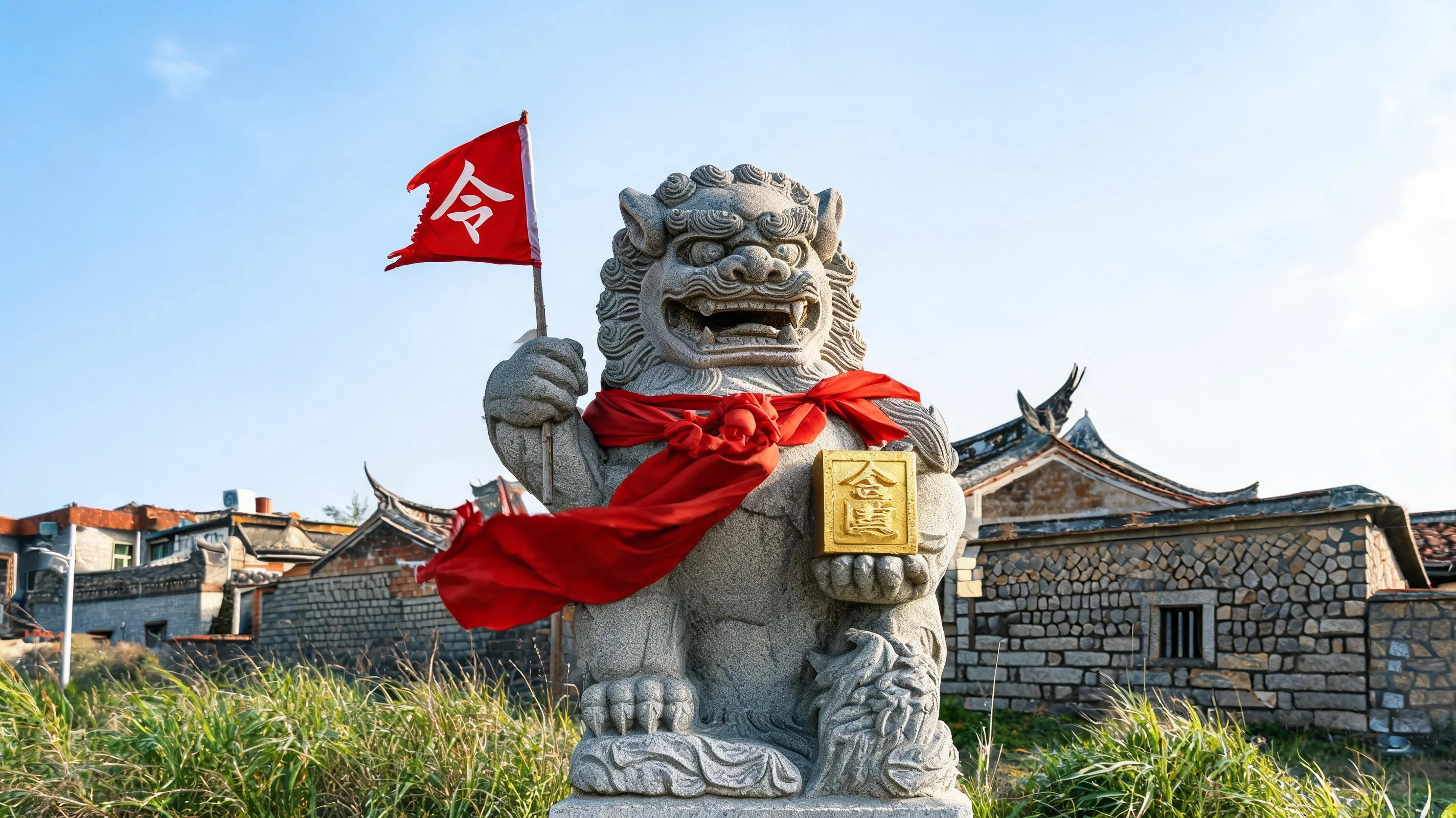
Wind Lion God
风狮爷 · 風獅爺
Fengshiye · Shishigong (Stone Lion Deity)
Divine Office
- Subduing wind-related malevolent forces and shielding villages from the fierce northeasterly monsoon winds of Kinmen
- Exorcising evil spirits and safeguarding homes and villages
- Neutralising harmful directional influences (chong sha) to ensure communal peace and safety
- Attracting wealth and bestowing blessings to ensure bountiful harvests for local villagers
Origin & Legend
Fengshiye is a unique tutelary deity native to Kinmen. Situated alone in the sea, Kinmen suffers from harsh northeasterly monsoons, and since the Ming and Qing dynasties, windblown sand has plagued local residents—prompting them to erect stone lions at village entrances and behind dwellings, directly facing the wind, to suppress wind-related malevolent forces. Its iconography merges the regional Fujian tradition of Shishigong (Stone Lion Deity) worship with legends linking the intensified sand erosion to Zheng Chenggong’s (Koxinga’s) large-scale logging and shipbuilding activities. The statues portray the lion standing tall, mouth agape, clutching a seal or command banner—like a valiant sentinel mastering the gales. Locals revere Fengshiye as Shishigong, worshipping it as a divine protector: whenever misfortune strikes a village, rituals are performed before it, its stone body adorned with red cloth, and offerings presented year-round. In recent decades, Fengshiye has evolved into a cultural emblem of Kinmen; over five hundred extant statues—each with distinct posture and expression—constitute a rare, living pantheon of village guardians unparalleled in the Chinese-speaking world.
 Wealth
 Safety & Blessing
 Wealth
 Safety & Blessing
 Studies & Exams
 Wealth
 Children & Marriage
 Wealth