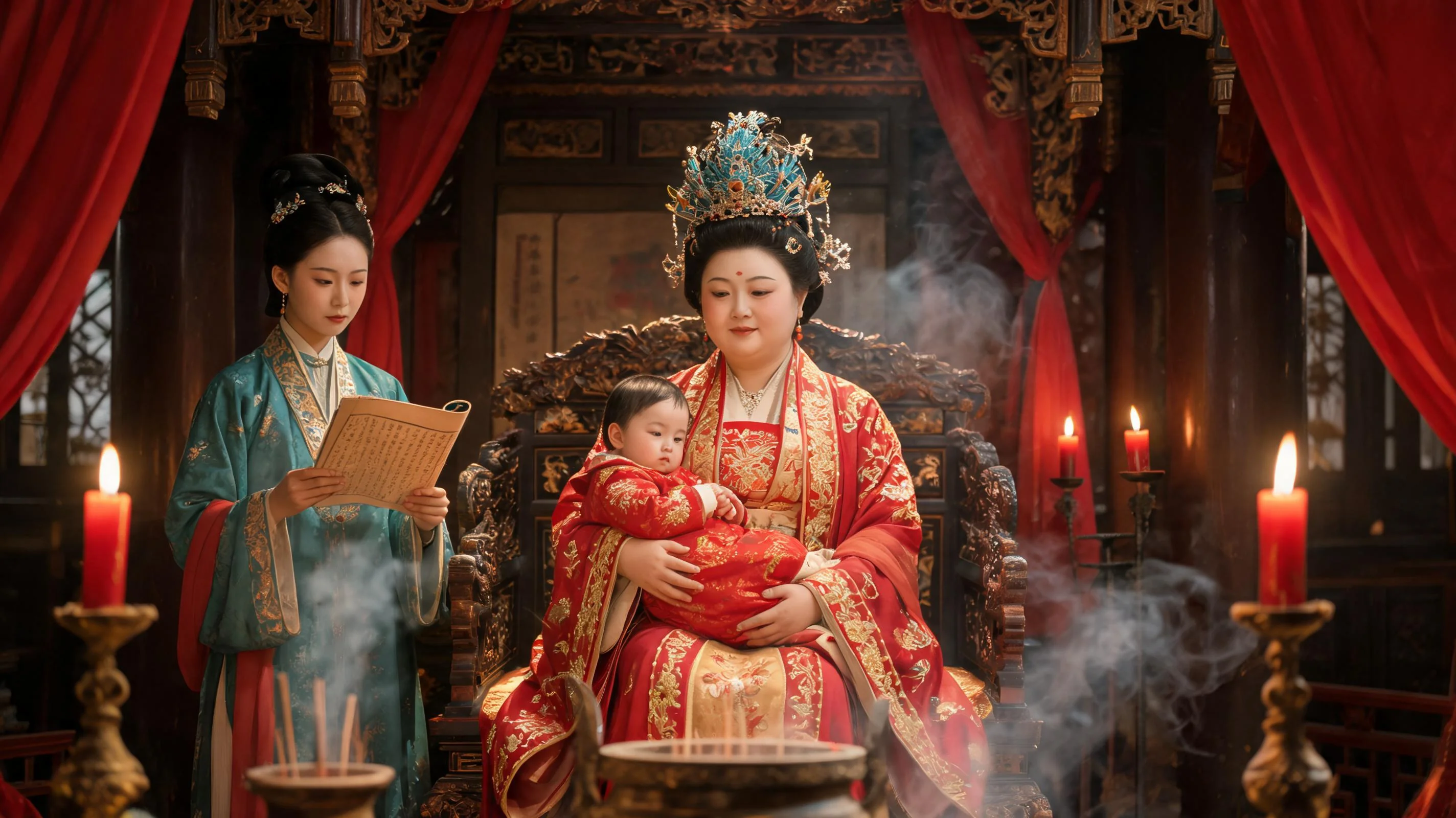
Douzhen Niangniang Goddess of Smallpox
痘疹娘娘 · 痘疹娘娘
Douzhen Niangniang, Holy Mother of Rash and Pustular Diseases
Divine Office
- Governance of smallpox (variola) and other eruptive diseases afflicting children, overseeing both illness and recovery
- Protection of infants and young children from smallpox epidemics and fostering their healthy growth
- Receiving offerings and fulfilling vows from families whose children have recovered from smallpox
- Serving as a focal point for mothers’ incense-burning prayers on behalf of their children
Origin & Legend
In premodern times, smallpox was a lethal, untreatable disease—children who contracted it faced uncertain survival, prompting folk belief in a dedicated deity to govern such afflictions. Regional names for this figure included Douzhen Niangniang (Goddess of Smallpox), Doumu Niangniang (Mother Goddess of Smallpox), and Banzhen Niangniang (Goddess of Rash and Pustules). The Douzhen Niangniang enshrined at Tianjin Tianhou Palace was especially renowned: when a child fell ill with smallpox, mothers would hasten to the temple to burn incense and pray fervently for the goddess’s protection—ensuring a smooth eruption of pustules and preventing disfiguring scars. Upon recovery, families returned with ritual offerings to fulfill their vows; some even fashioned paper robes studded with symbolic ‘pox’ and hung them before the deity’s altar as tokens of gratitude. This cult served as a profound spiritual anchor for mothers during an era marked by medical scarcity—its gradual decline followed the widespread adoption of cowpox vaccination, yet it remains a poignant historical testament to popular anxieties and the enduring power of maternal devotion.
 Wealth
 Safety & Blessing
 Wealth
 Safety & Blessing
 Studies & Exams
 Wealth
 Children & Marriage
 Wealth