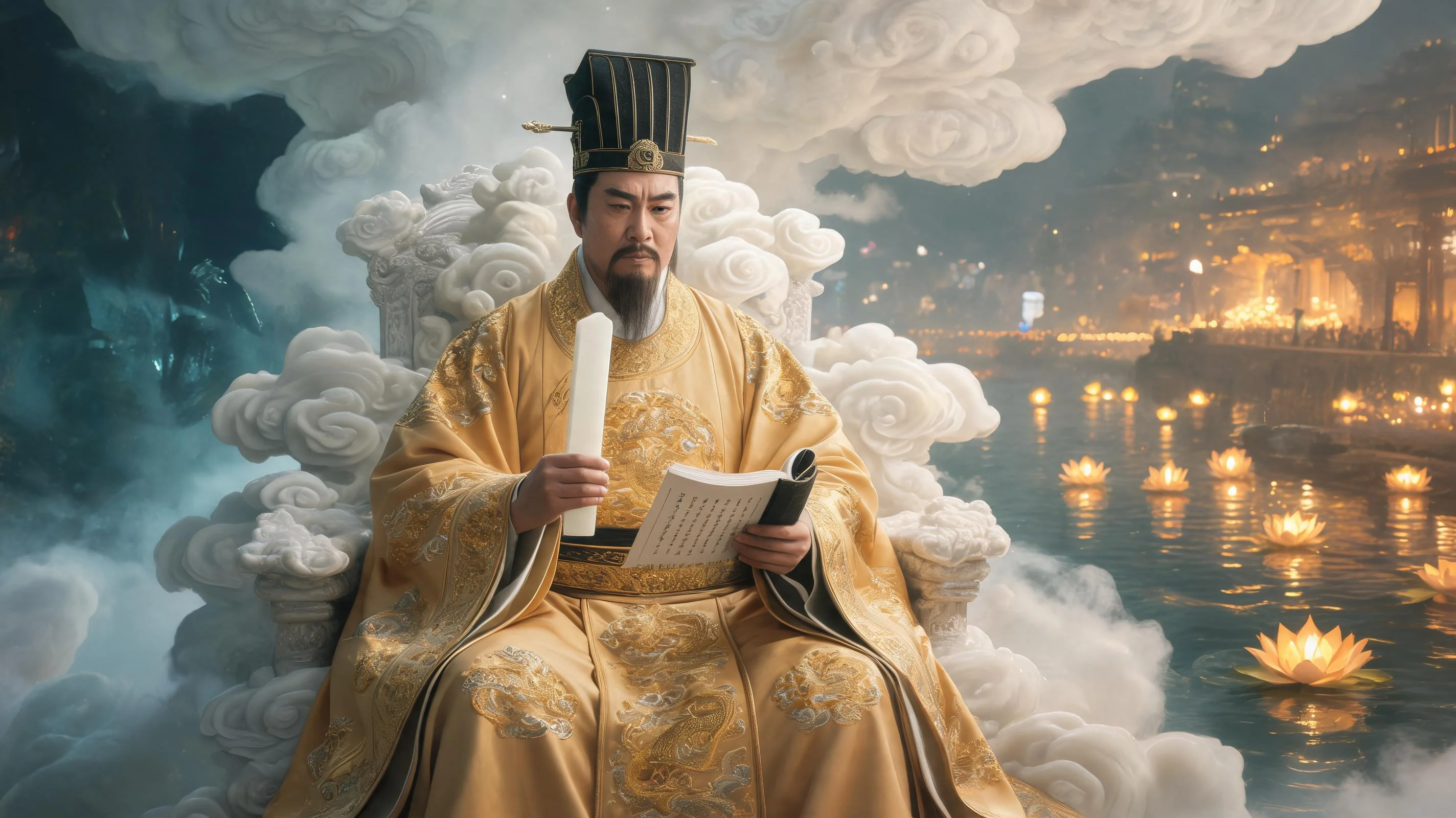
Earthly Official
地官大帝 · 地官大帝
Zhongyuan Second-Rank Pardoning Earthly Official, the Great Emperor Qingxu
Divine Office
- One of the Three Officials (Sanguan), born on the 15th day of the 7th lunar month (Zhongyuan Festival)
- Examines human merits and transgressions and grants pardon for sentient beings’ sins
- Oversees all deities of the underworld and administers the karmic registers of the netherworld
- Pardons sins and resolves grievances for the deceased, liberating them from suffering and calamity
Origin & Legend
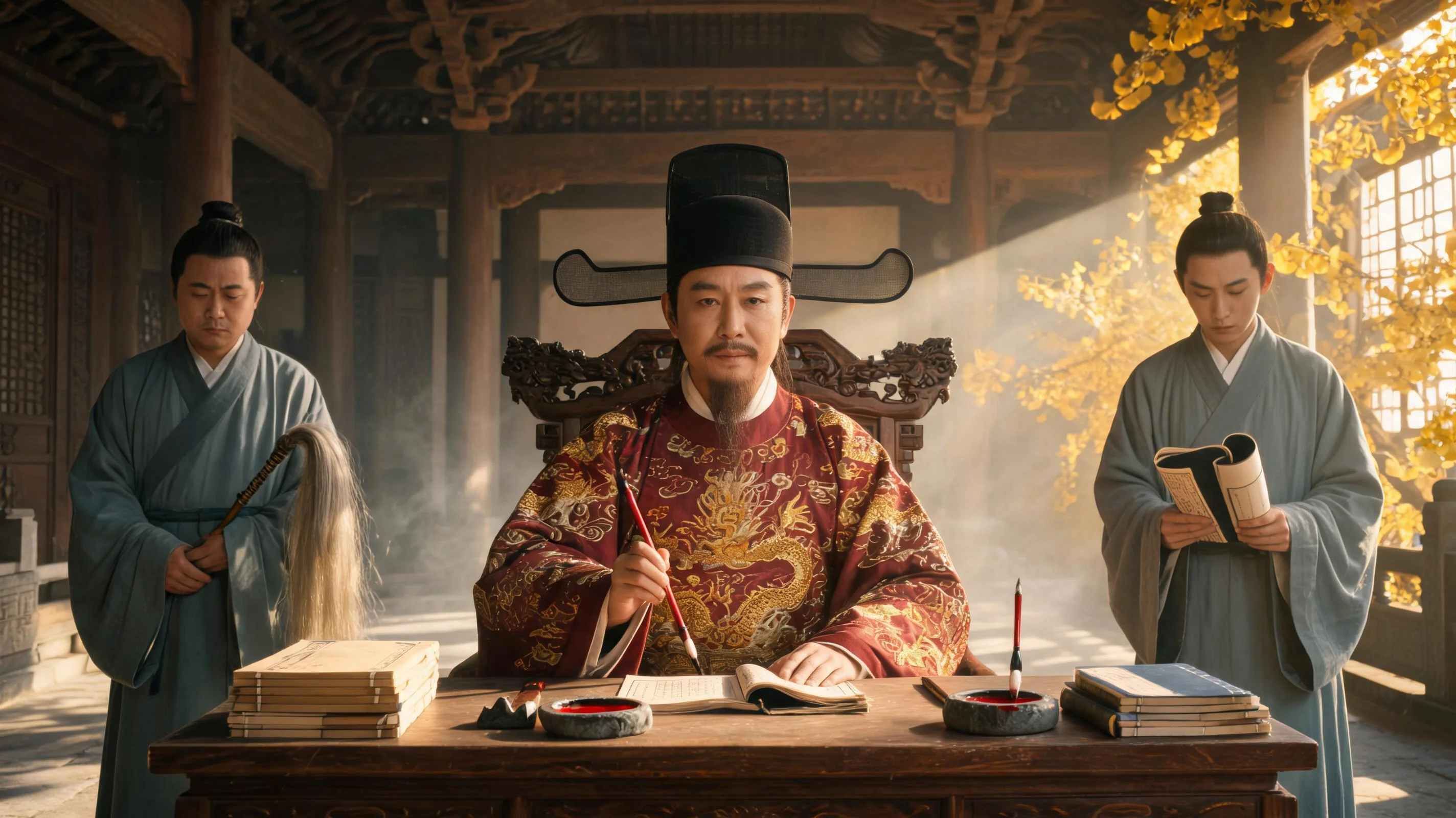
Diguang Dadi’s full title is 'Zhongyuan Second-Rank Pardoning Earthly Official, the Great Emperor Qingxu'. As one of the Three Officials (Sanguan) in Daoism, he governs the karmic examination and administration of the underworld and presides over the absolution of sentient beings’ sins. His birthday falls on the 15th day of the 7th lunar month—the Zhongyuan Festival—when Daoist temples hold Zhongyuan ritual offerings (zhaijiao) to pardon the deceased and relieve them of karmic suffering. In popular tradition, this day evolved into the Zhongyuan Festival, a time for ancestral veneration and rites for the departed; it syncretically merged Daoist beliefs in the Earthly Official’s power to grant absolution with Buddhist Ullambana practices, becoming a major occasion for filial piety and reverence toward ancestors. In the Han-dynasty belief system of the 'Three Officials Handwritten Petitions' (Sanguan shushu), the Earthly Official was already regarded as the divine examiner who records and judges an individual’s lifetime merits and misdeeds. Historically, those burdened by guilt or misfortune would observe fasting and prayer on Zhongyuan Day, beseeching the Earthly Official to forgive their transgressions and transform disaster into blessing. In San Guan halls, the Earthly Official stands beside the Heavenly Official, portrayed with grave composure and unwavering resolve.
 Safety & Blessing
 Safety & Blessing
 Health & Averting Calamity
 Studies & Exams
 Children & Marriage
 Warding Off Evil
 Safety & Blessing
 Children & Marriage