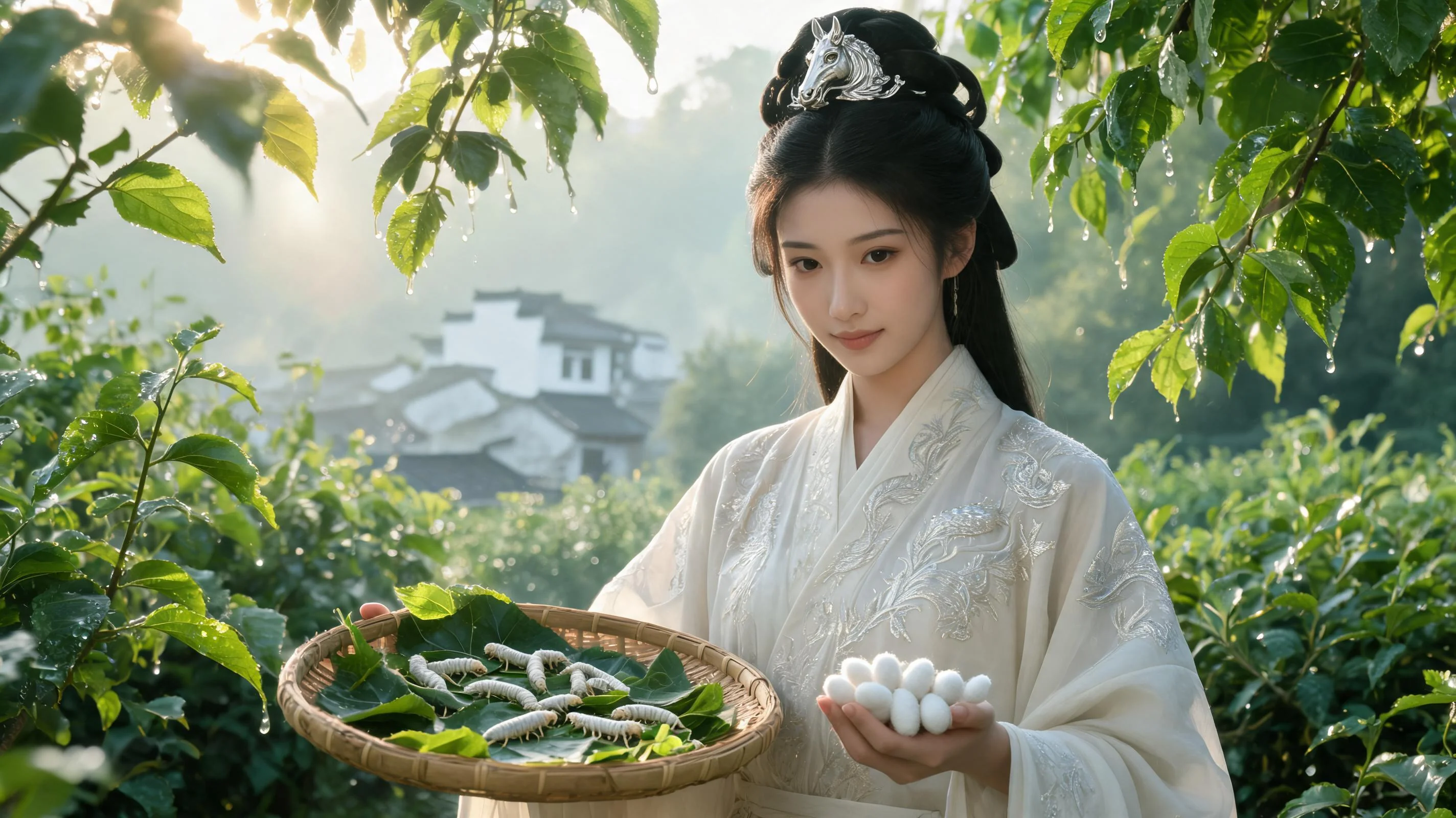
Silkworm Goddess
蚕花娘娘 · 蠶花娘娘
Mǎtóu Niáng (Horse-Headed Maiden), Holy Mother of Silkworms
Divine Office
- Governing sericulture and silkworm husbandry
- Protecting bountiful cocoon harvests
- Bestowing blessings upon silk reeling and brocade weaving
- Safeguarding the livelihoods of sericulturists
Origin & Legend
Cánhuā Niángniáng, also known as Mǎtóu Niáng (Horse-Headed Maiden), Mǎmíng Wáng (Horse-Clarifying King), and the Five Holy Silkworm Deities, originates from an ancient legend recorded in the 4th-century text Soushen Ji (In Search of the Supernatural): A young woman, pining for her absent father, jokingly vowed to marry the family horse; whereupon the horse’s hide enveloped her and carried her aloft until she landed upon a mulberry tree and transformed into a silkworm—hence the deity’s iconic horse-headed, human-bodied form. While Léizǔ is venerated as the cultural progenitor of sericulture, it is this Horse-Headed Maiden whom rural sericulturists traditionally worship in daily practice. In the silkworm-producing regions of Hangzhou, Jiaxing, and Huzhou in Jiangsu and Zhejiang, devotees honour Cánhuā Niángniáng on her birthday—the 12th day of the 12th lunar month—and again before silkworm rearing begins at Qingming Festival, lighting ‘silkworm-flower lamps’, holding ‘silkworm-flower temple fairs’, and pasting images of the sacred horse inside silkworm-rearing rooms to pray for ‘twenty-four portions of silkworm flowers’—a folk idiom signifying an exceptionally abundant cocoon harvest—making her the spiritual cornerstone of Jiangnan’s silk civilisation.
 Wealth
 Safety & Blessing
 Wealth
 Safety & Blessing
 Studies & Exams
 Wealth
 Children & Marriage
 Wealth