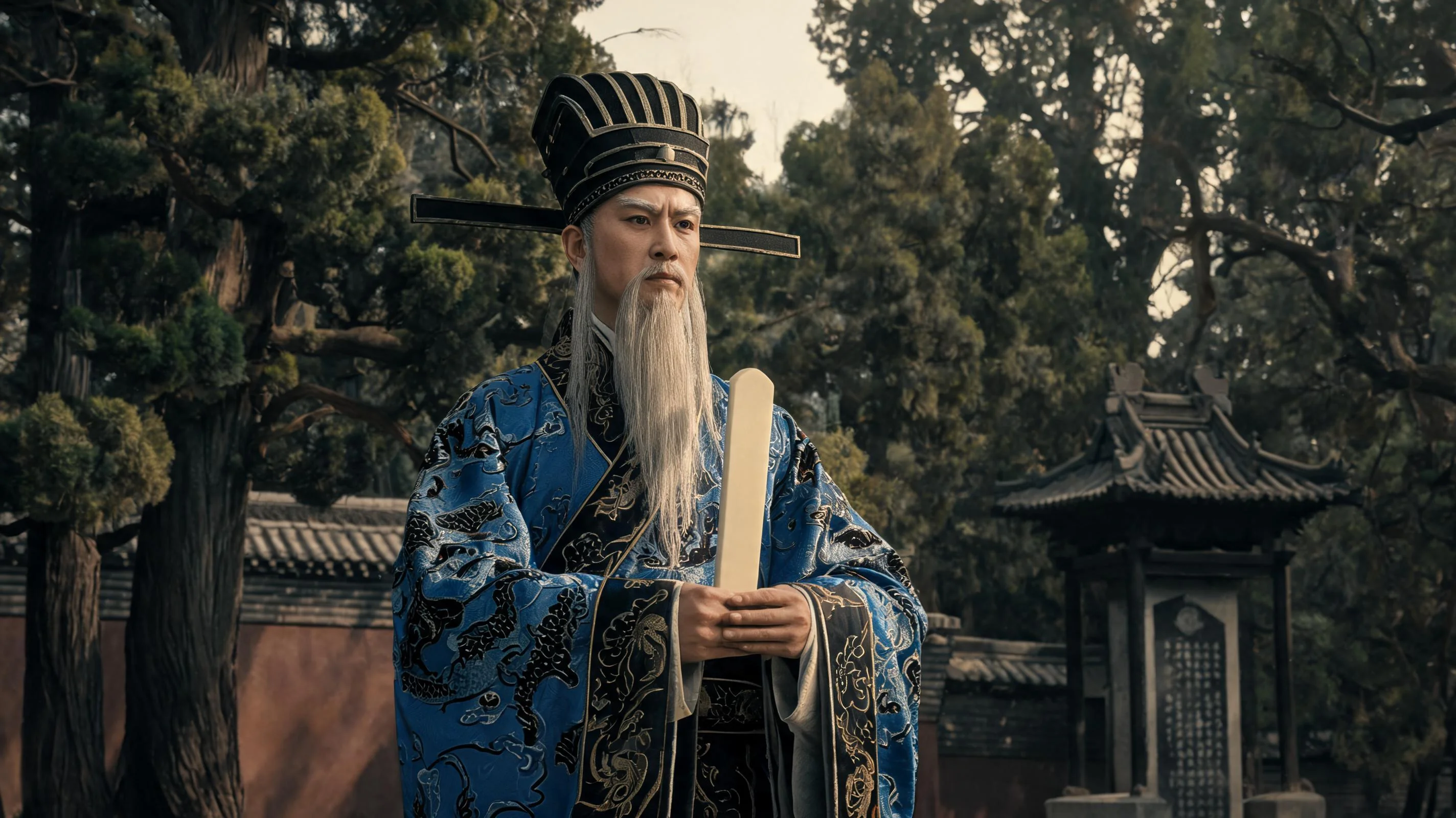
Bigan (God of Wealth)
文财神比干 · 文財神比干
Wenqu Xingjun, Wen Caishen Bigan
Divine Office
- Governs earthly wealth and safeguards fair trade for merchants
- Upholds impartial justice in commerce, owing to his heartless state
- Protects honest and trustworthy business practices, ensuring integrity in all transactions
- Oversees literary fortune and official appointments
Origin & Legend
Bigan was the son of King Wending of the Shang dynasty and uncle of King Zhou. Serving as Shaoshi (Grand Tutor), he remained steadfastly loyal to his sovereign and country, offering forthright and courageous remonstrances. When King Zhou descended into tyranny and debauchery, Bigan persisted in admonishing him for three days without withdrawing; enraged, the king declared, 'I have heard that the heart of a sage has seven apertures,' and ordered Bigan’s heart cut out. After King Wu of Zhou overthrew the Shang, he enfeoffed Bigan’s tomb with honours. Later generations, moved by Bigan’s heroic loyalty and martyrdom, erected temples in his honour; the Bigan Temple in Weihui, Henan Province, stands today as the ancestral pilgrimage site for Lin clans across the world. Folk tradition holds that, having lost his heart, Bigan became incapable of bias—thus ensuring scrupulous fairness in commercial dealings and immunity to deceit. Consequently, he was elevated to the rank of Wen Caishen, and merchants worship him to secure honesty in trade, fairness to young and old alike, and wealth acquired through righteous means.
 Wealth
 Safety & Blessing
 Wealth
 Safety & Blessing
 Studies & Exams
 Wealth
 Children & Marriage
 Wealth