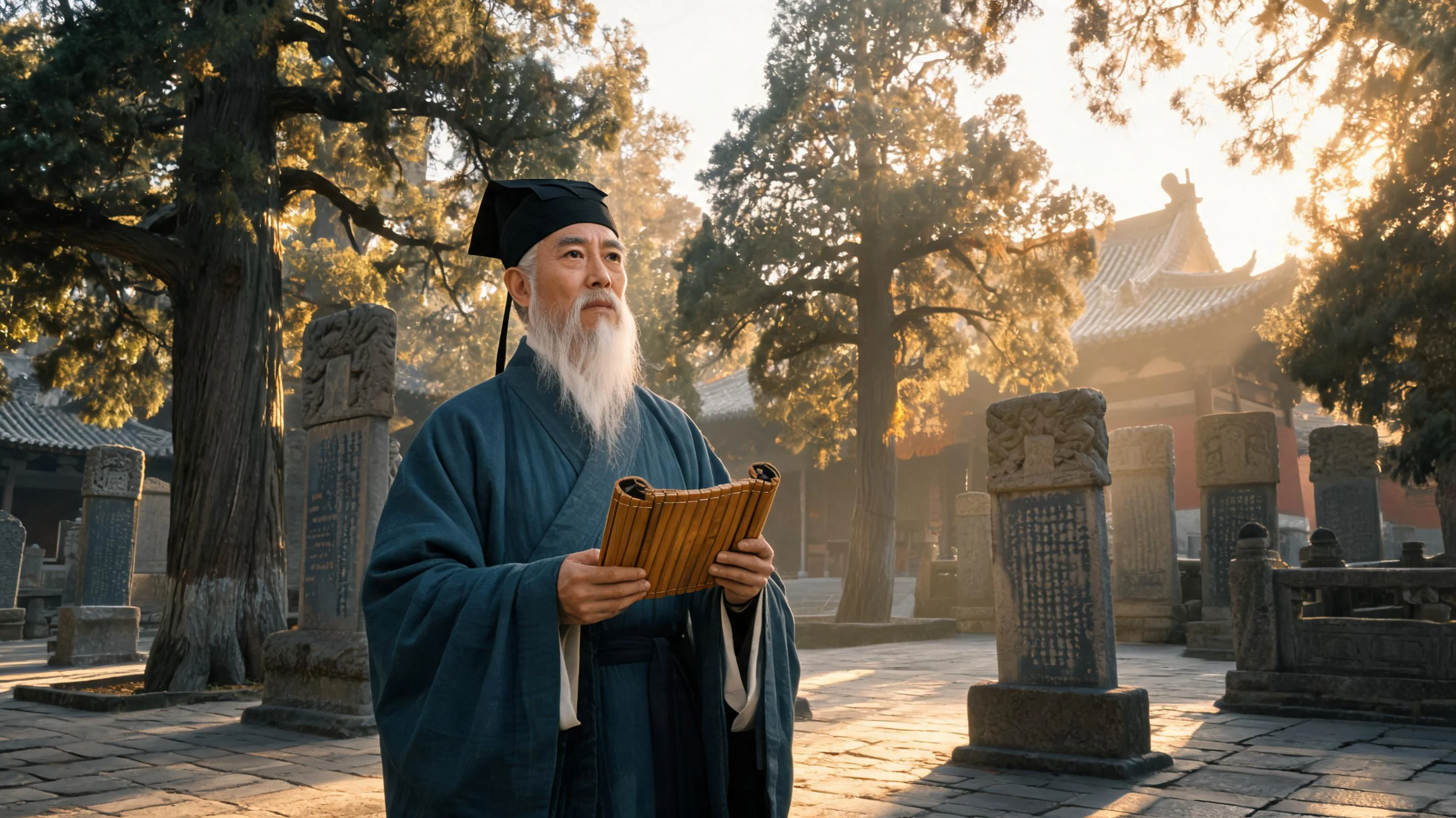
Mencius
孟子 · 孟子
Duke Yasheng · Second Sage of Confucianism
Divine Office
- Blessing scholarly pursuits and literary excellence
- Protecting academies and Confucian education
- Safeguarding the virtues of benevolence and righteousness
- Inspiring the lofty, righteous qi (vital moral energy)
- Guarding maternal instruction and family ethical traditions
Origin & Legend
Mencius, whose given name was Ke, was a native of Zou. He studied under disciples of Zisi—the grandson of Confucius—and inherited and further developed Confucius’s teachings. He advocated the theory of innate human goodness, promoted humane governance and the principle that 'the people are the most important element in a state; the spirits of the land and grain come next; the sovereign is the lightest', yet his proposals were rejected by the rulers of Qi and Liang. Thereafter, he withdrew from political life and, together with disciples such as Wan Zhang, composed the seven chapters of the *Mencius*. His celebrated declaration—'Wealth and rank cannot corrupt him; poverty and humble station cannot sway him; power and might cannot subdue him'—has inspired generations of scholars and officials with its vision of the lofty, righteous qi. The legendary stories of Mencius’s mother—her three relocations to secure an optimal environment for her son’s upbringing, and her cutting the loom shuttle to teach the value of perseverance—have become timeless models of maternal pedagogy throughout China. In the Yuan dynasty, he was posthumously enfeoffed as 'Duke Yasheng' (Duke of the Second Sage). The Mencius Temple in Zoucheng, second in architectural scale and ritual significance only to the Confucius Temple in Qufu, has long been revered by scholars as the sacred site for cultivating learning and moral virtue; annual rites commemorating his birth on the 2nd day of the 4th lunar month continue unbroken to this day.
 Studies & Exams
 Health & Averting Calamity
 Safety & Blessing
 Health & Averting Calamity
 Health & Averting Calamity
 Studies & Exams
 Safety & Blessing
 Studies & Exams