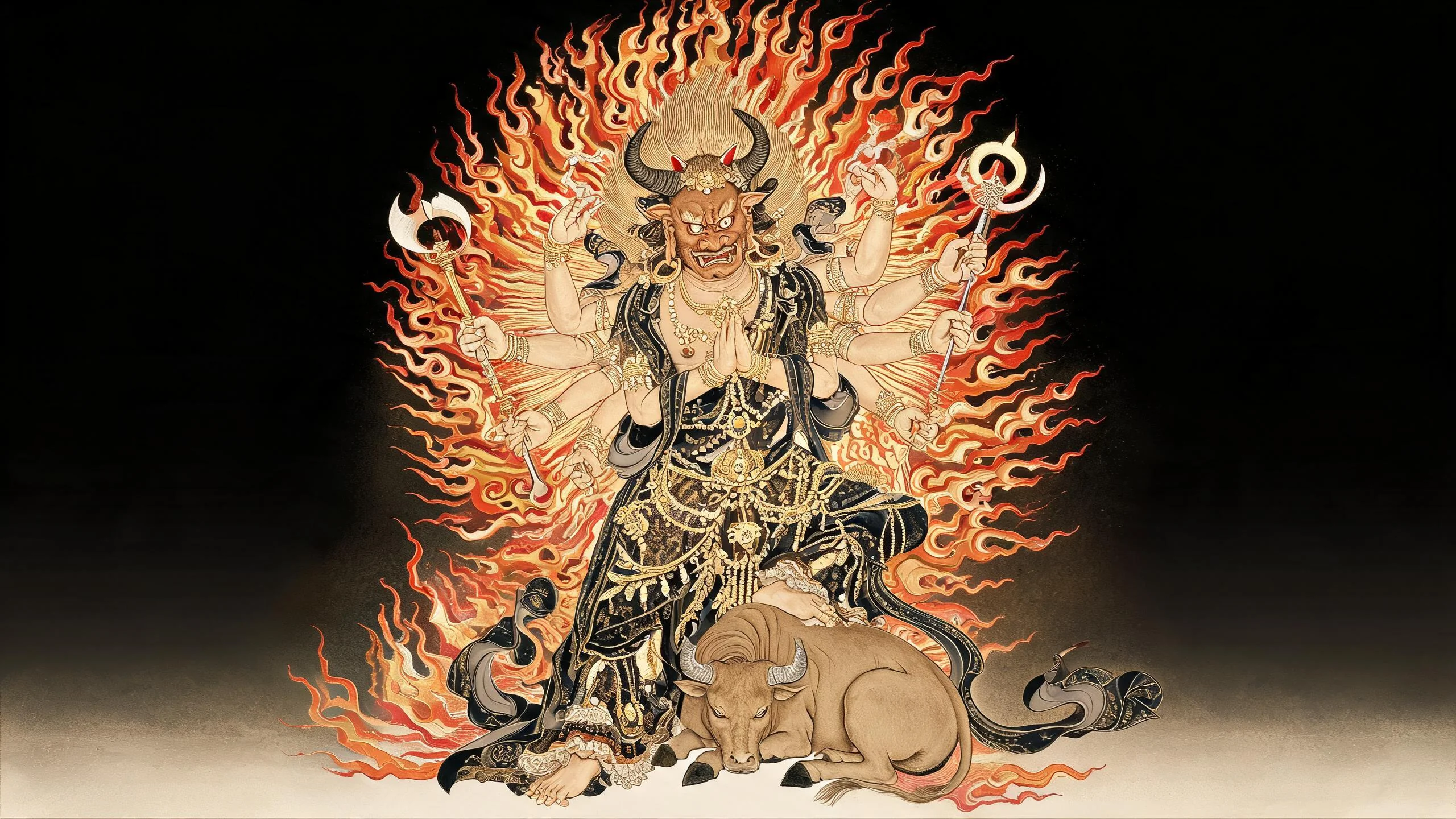
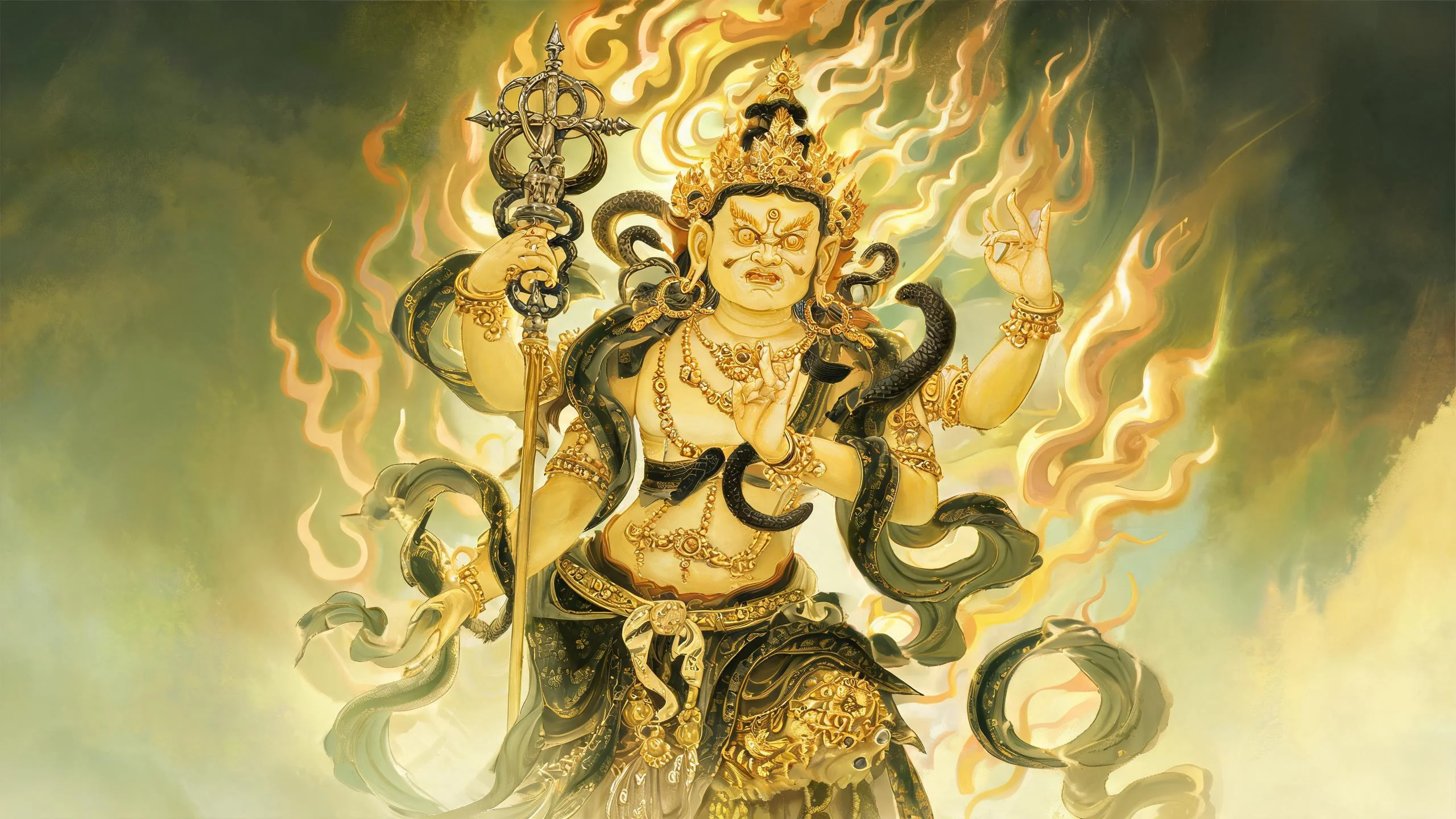
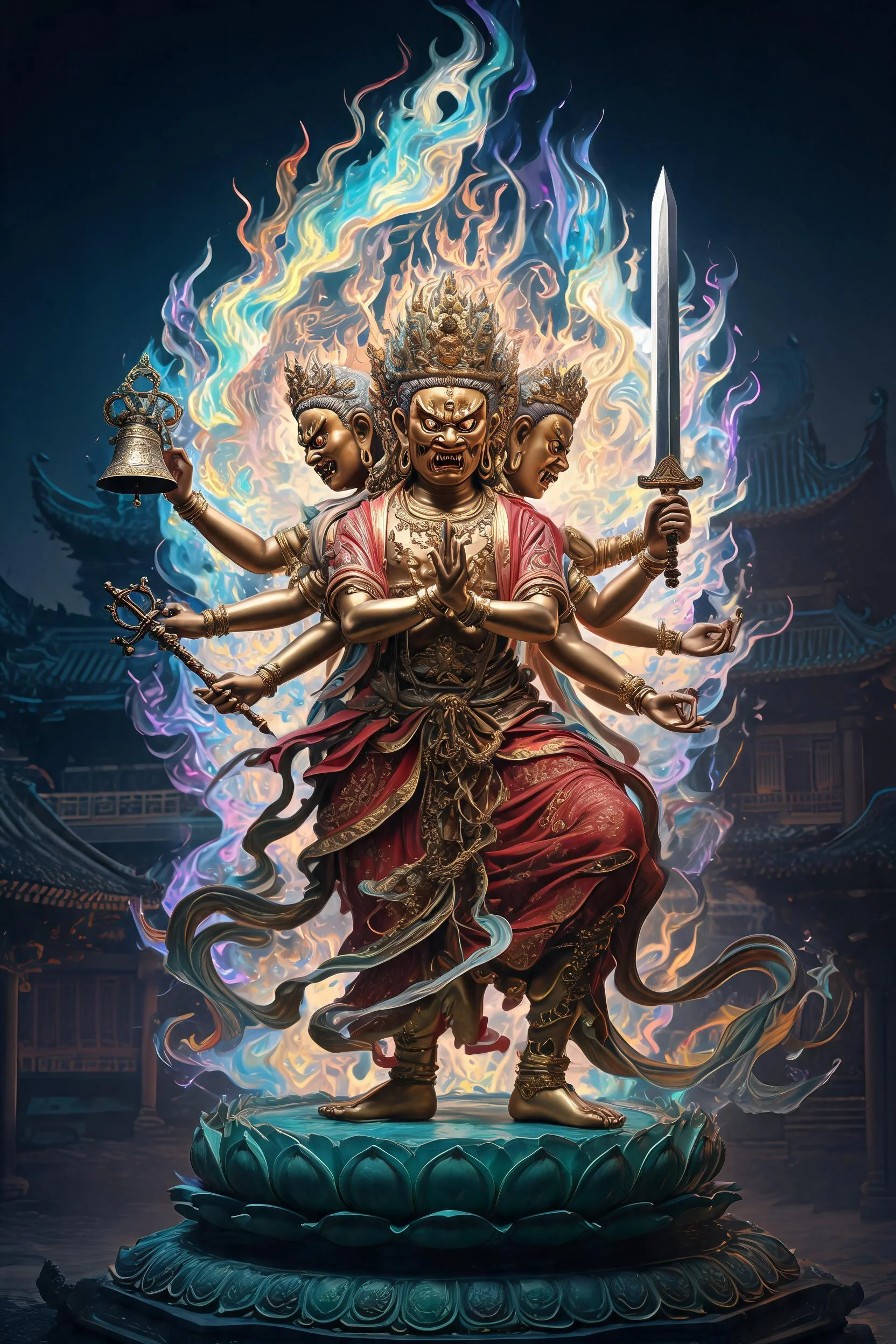
Yamantaka Vidyaraja
大威德明王 · 大威德明王
The Terrifying and Supreme Conqueror of Death, the Wrathful Manifestation of Manjushri Bodhisattva
Divine Office
- Subduing Yama, the Lord of Death, and dispelling terror
- Severing all afflictions and adversarial forces
- Protecting the true Dharma and vanquishing heterodox doctrines
- Demonstrating the inevitability of death to inspire diligent practice
Origin & Legend
Yamantaka, whose Sanskrit name means 'Destroyer of Yama', is revered in Tibetan Buddhism as the wrathful emanation of Manjushri Bodhisattva and is also known as Vajrabhairava, the 'Terrifying Vajra'. The epithet 'Greatly Powerful and Virtuous' (Daweide) signifies both supreme power ('great power') and the capacity to overcome evil ('great virtue'); thus, 'Great Power and Great Virtue' together form the name Yamantaka. Legend recounts that he subdued the ferocious Yama, Lord of Death, assuming a bull-headed form to overpower Yama’s own authority—thereby teaching sentient beings to confront impermanence directly and to practise diligently, so that even the Lord of Death cannot instil fear. Successive lineage masters of the Gelug school have adopted Yamantaka as their principal meditational deity. His iconographic form—nine faces, thirty-four arms, and sixteen legs—embodies profound doctrinal meanings in each feature, manifesting ultimate wrathful majesty alongside consummate wisdom.
 Warding Off Evil
 Safety & Blessing
 Children & Marriage
 Warding Off Evil
 Health & Averting Calamity
 Warding Off Evil
 Warding Off Evil
 Wealth